
Features
- Measure nitrate, nitrite, and/or total nitrate/nitrites in plasma/serum, urine, tissue culture media, and tissue homogenates
- Assay 40 samples in duplicate/96-well plate
- Assay Range: 5-35 µM
- Plate-based colorimetric measurement (540-550 nm)
Technical Support & Resources
Visit our FAQ
Contact Us
Toll Free Phone (USA and Canada Only): (888) 526-5351
Direct Phone: (734) 975-3888
Product Categories


Technical Information
- Nitric Oxide Metabolite Detection Kit
Shipping & Storage Information
Recommended Products


Certificates of Analysis & Batch Specific Data
Provide batch numbers separated by commas to download or request available product inserts, QC sheets, certificates of analysis, data packs, and GC-MS data.
Bioanalysis & Assay Development Services
Your Vision. Our Expertise.
- Bioanalysis and compound screening using Cayman or qualified commercial assay kits
- Development and qualification of fit-for-purpose assays in a variety of formats and platforms
- Experienced scientists dedicated to developing the best strategy for your project
Product Description
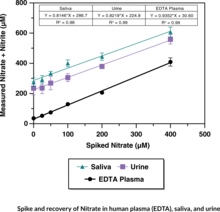
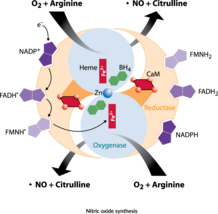
Cayman’s Nitrate/Nitrite Colorimetric Assay Kit provides an accurate and convenient method for measurement of total and individual nitrate and nitrite concentrations in a simple two-step process utilizing nitrate and nitrite standards. The first step is the conversion of nitrate to nitrite utilizing nitrate reductase. The second step is the addition of the Griess Reagents which convert nitrite into a deep purple azo compound (See Figure 2).1 Photometric measurement of the absorbance due to this azo chromophore accurately determines NO2- concentration. This kit can be used to measure nitrate and nitrite in plasma/serum, urine, tissue culture media, and tissue homogenates. However, it cannot be used to analyze nitrate and nitrite from an in vitro assay of nitric oxide synthase (NOS) in which excess NADPH has been added. For these assays a second method (LDH method) is utilized and is available from Cayman Chemical in a 96 well plate format (Item No. 760871).
Needed but not supplied: Please download the kit booklet to verify if UltraPure Water (Milli-Q or equivalent) or any other components are needed for this assay.
WARNING This product is not for human or veterinary use.
References & Product Citations
1. Analysis of nitrate, nitrite, and [15N]nitrate in biological fluids. Anal. Biochem. 126(1), 131-138 (1982).
Distinct interactions of cannabinol and its cytochrome P450-
Urineprint of high-
Inert gas mild pressure action on healthy humans: The "IPA" study. Int. J. Mol. Sci. 25(22), 12067 (2024).
Chemical constituents and bioactive principles from the Mexican truffle and fermented products of the derived fungus Ustilago maydis MZ496986. J. Agric. Food Chem. 71(2), 1122-1131 (2023).
Differential manifestation of RONS and antioxidant enzymes in response to singular versus combinatorial stress in Chironomus ramosus. Stress Biol. 2(1), 56 (2022).
Anti-
Neuroinflammation mediated by glia maturation factor exacerbates neuronal injury in an in vitro model of traumatic brain injury. J. Neurotrauma 37(14), 1645-1655 (2020).
Could resistance to lactate accumulation contribute to the better swimming performance of Brycon amazonicus when compared to Colossoma macropomum? Peer J. 6, e5719 (2018).
Exogenous pancreatic kallikrein improves diabetic cardiomyopathy in streptozotocin-
Specificty of detection methods of nitrites and ozone in aqueous solutions activated by air plasma. Plasma Process. Polymer. 15, e1800030 (2018).
Use of anabolic androgenic steroids produces greater oxidative stress responses to resistance exercise in strength-
Pharmacological preconditioning with gemfibrozil preserves cardiac function after heart transplantation. Sci. Rep. 7, 14232 (2017).
Omega-
Cardioprotective effect of Ulmus wallichiana planchon in β-
Acute benefits of the microbial-
Effect of intraperitoneal etanercept on oxidative stress in rats with peritonitis. Oxid. Med. Cell. Longev. 9418468, (2016).
Impact of scorpion venom as an acute stressor on the neuroendocrine-
Pharmacological characterization of the relaxant effect induced by adrenomedullin in rat cavernosal smooth muscle. Braz. J. Med. Biol. Res. 47(10), 876-885 (2014).
Regulation of nitric oxide production by δ-
L-
Ethyl gallate, a scavenger of hydrogen peroxide that inhibits lysozyme-
Exercise decreases plasma antioxidant capacity and increases urinary isoprostanes of IPF patients. Respir. Med. 104(12), 1919-1928 (2010).
Effect of exercise training on endothelial function in men with coronary artery disease. Am. J. Cardiol. 93, 617-620 (2004).
Circulating heavy chain IgG, a pathological mediator for coronary artery disease, recognizes platelet surface receptors of both prostacyclin and insulin. Platelets 14(4), 203-210 (2003).
Anticoagulants and other preanalytical factors interfere in plasma nitrate/nitrite quantification by the Griess method. Nitric Oxide 6(2), 178-185 (2002).
Role of endothelin and isoprostanes in slow pressor responses to angiotensin II. Hypertension 37(2), 505-511 (2001).
Mechanisms of vascular instability in a transgenic mouse model of sickle cell disease. Am. J. Physiol. Renal Physiol. 279, R1949-R1955 (2000).
Contact Info
Cayman Chemical1180 East Ellsworth RoadAnn Arbor, Michigan 48108 USAToll Free: (800) 364-9897(USA and Canada only)Fax: (734) 971-3640


