Meet the Expert: Lipidomic Profiling Services
Our experts have many decades of collective experience in lipid synthesis, purification, and characterization.
Read More
The experts at Cayman offer untargeted lipidomics and targeted lipid analysis services to analyze lipid profiles in biological samples. With state-of-the-art facilities and decades of collective expertise in lipid synthesis, purification, and characterization, we can support projects ranging in scope from analyzing a single lipid mediator or small group of lipid biomarkers to characterizing broad changes in metabolism and signaling involving multiple lipid categories. We use standards from our catalog of high-quality lipids and well-established, optimized methods for sample preparation, lipid extraction, LC-MS/MS, and data analysis to provide accurate results with a quick turnaround time.
Whether you are planning a small pilot study or require large-scale analysis, our scientists are here to help make your research possible. Our lipid analysis has been published in high-impact journals including Nature, Cancer Cell, and more.
Identify changes in lipid levels across multiple classes
Quantify changes in the levels of specific lipids
Scientific Poster:
Robust and Versatile Workflow for Routine Lipidomics Analysis
Scientific Poster:
Immunoaffinity Capture Mass Spectrometry for Endogenous Lipid Biomarker Analysis
Untargeted lipidomics provides a semiquantitative overview of many of the more abundant molecular species across most lipid categories, including fatty acyls, glycerolipids, glycerophospholipids, sphingolipids, sterol lipids, and prenol lipids.
Lipid extracts are analyzed using high-performance liquid chromatography (HPLC), high-resolution mass spectrometry (HRMS), and data-dependent tandem mass spectrometry (ddMS/MS) to create a detailed lipid profile and identify differences in the levels of lipids between samples.
View Additional Information (PDF)Identification and relative quantitation of lipid species is facilitated by the use of Lipostar software and the LIPID MAPS® Structure Database (LMSD). Basic data analysis includes identification of lipids, reporting of normalized peak responses in all samples, and data overview visualization. Additional data interpretation, statistical analysis, and comparative graphs are available as supplemental services.
Representative coverage of lipid groups by untargeted lipidomics analysis of a mammalian sample. The numbers indicate how many molecular species were identified in each lipid category.
Targeted lipid analysis provides semiquantitative or quantitative analysis of specific molecular species, typically within a class or subclass of lipids.
We have a variety of established targeted lipid panels available, as well as options for customization and method development. Additional panels may be available upon request. We also offer analysis of smaller groups of lipids or single lipid analytes.
Click below to download individual panel details (PDF)
Lipid extracts are typically analyzed using HPLC and multiple reaction monitoring (MRM) of a predetermined list of analytes. This approach provides sensitive and specific detection of lipids and is especially useful for quantifying analytes present at low levels in samples, such as bioactive lipid mediators (e.g., prostaglandins, leukotrienes, or endocannabinoids). Long-chain fatty acids are analyzed using GC-MS or GC-FID.
Basic data analysis includes absolute or relative quantitation of lipids, as well as representative data visualization. Additional data interpretation and statistical analysis are available as supplemental services.
Heat map showing the relative levels of oxylipins in murine tissue.
Cayman’s lipid analysis laboratories are equipped with state-of-the-art ultra-performance liquid chromatography (UPLC) systems coupled to triple-quadrupole or Orbitrap mass spectrometers, as well as advanced analysis software.
We have experience analyzing lipids in a wide range of tissue types, biological fluids, and both prokaryotic and eukaryotic cells. Our scientists will work with you to determine the most suitable type of lipid analysis, the amount of sample required, and best practices for collection, handling, storage, and shipping of samples.
We use rigorously validated internal and calibration standards from our catalog of high-quality lipids to control for variability in recovery of analytes and enable accurate identification and quantitation. We also offer custom synthesis of unlabeled or isotopically labeled analytical standards.
We offer tiered pricing for projects analyzing more than 10 samples. You can request more information, including project-specific pricing, by submitting the “Contact Us” form.
Our experts have many decades of collective experience in lipid synthesis, purification, and characterization.
Read More
Listen to a variety of topics from the world of lipids and lipidomics.
WatchMaxSpec® Reference Plasma (Human) was characterized using both targeted and untargeted LC-MS.
Download App Note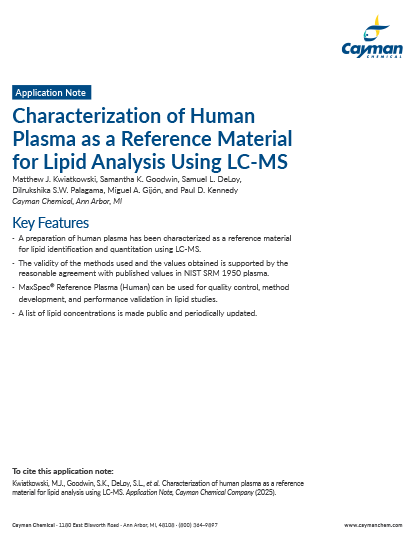
This study evaluated the accuracy of LC-MS-based lipid quantitation using different calibration and internal standards.
Download App Note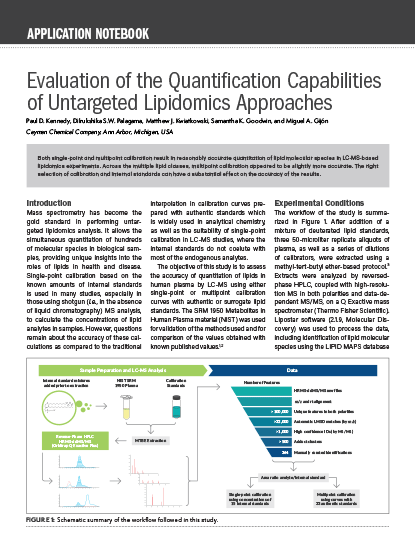
New standards for EpODEs and DiHODEs were used to optimize octadecanoid analysis in rat plasma.
Download App Note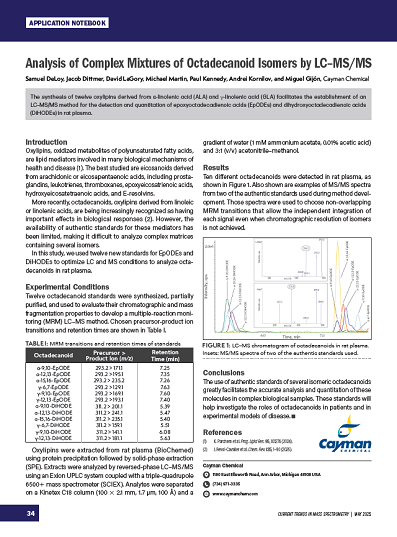
IA-MS outperformed SPE-MS allowing for lower level quantitation using a simplified workflow.
Download App Note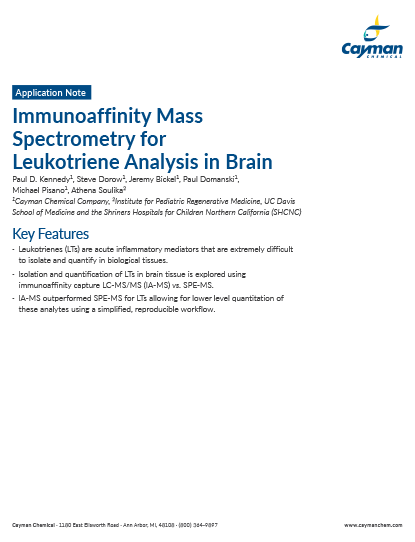
Differences are observed in the lipid profiles of plasma extracellular vesicles from normal and obese mice.
View Poster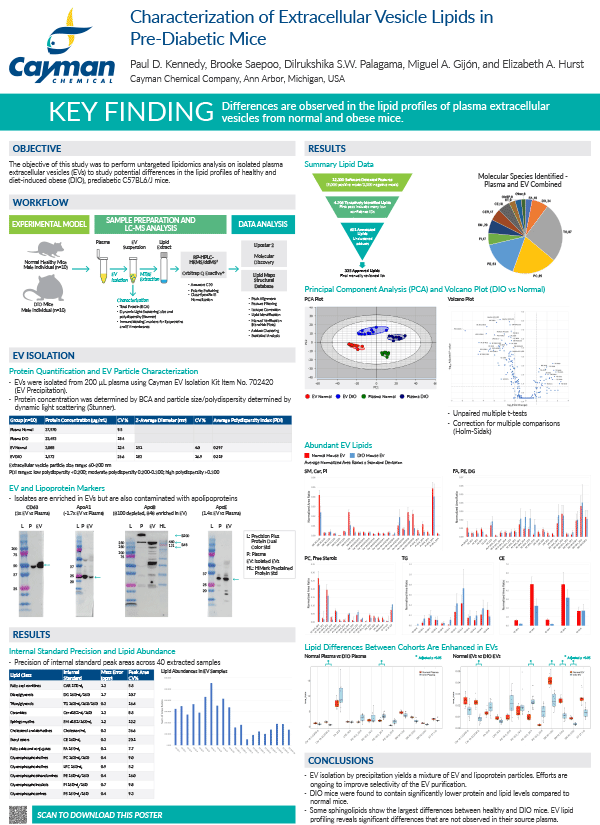
Our experts have many decades of collective experience in lipid synthesis, purification, and characterization.
View Poster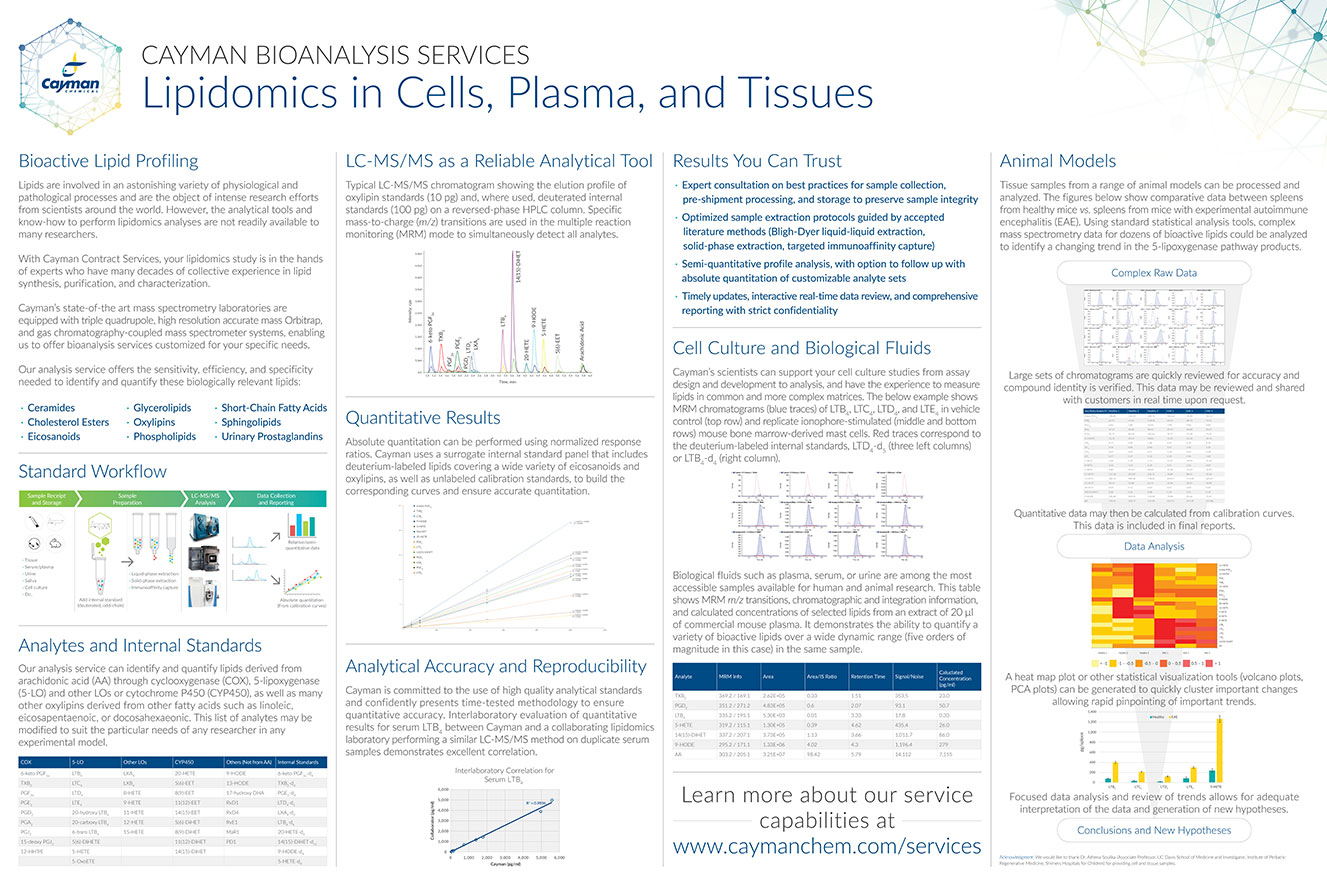
Rich data that can reveal novel mechanisms of metabolic regulation.
View Poster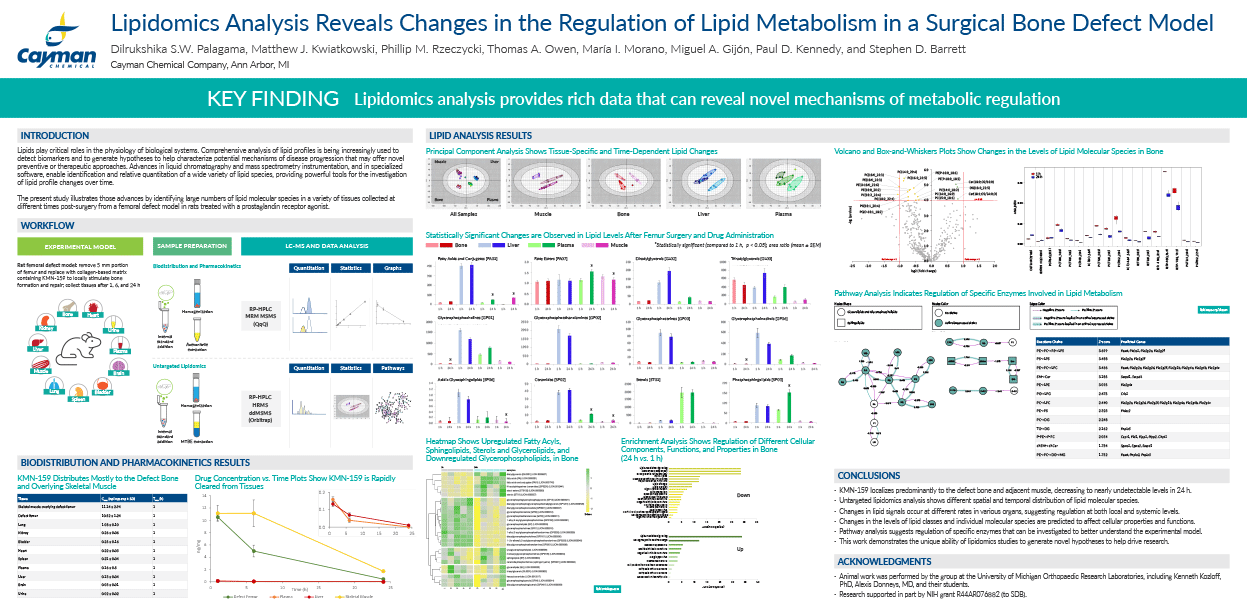
Immunoaffinity (IA) capture has multiple benefits over traditional SPE for targeted trace analysis.
View Poster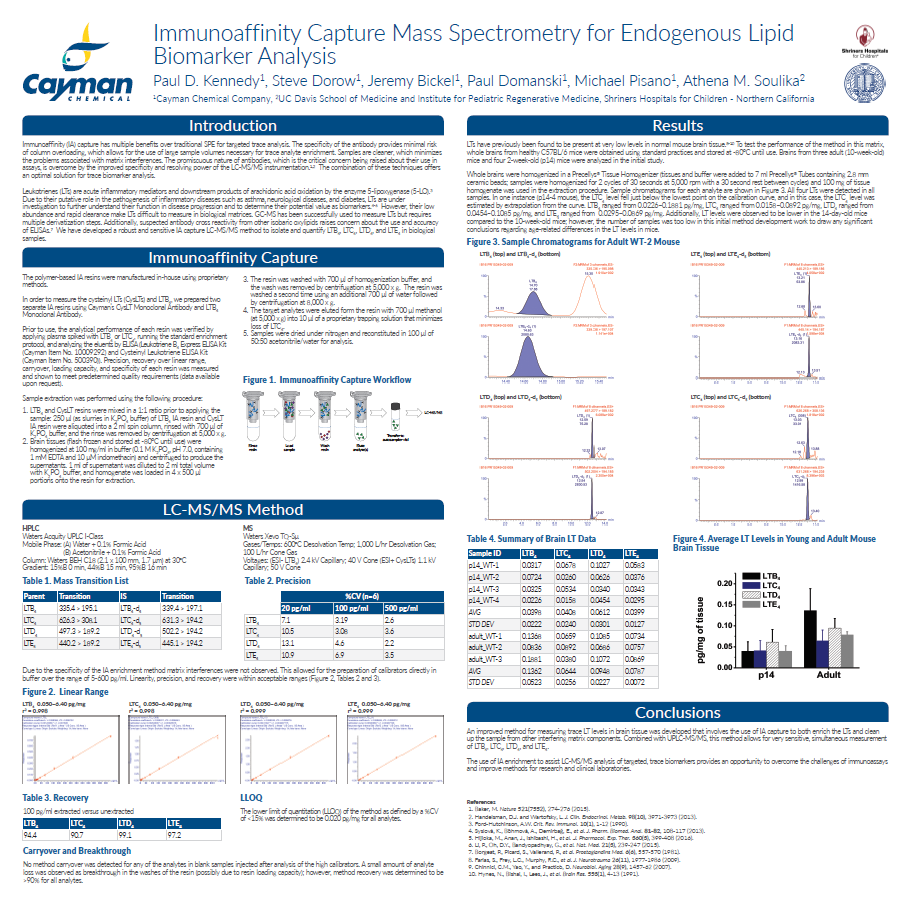
Optimization of data processing steps improves coverage and accuracy of lipidomics analysis.
View Poster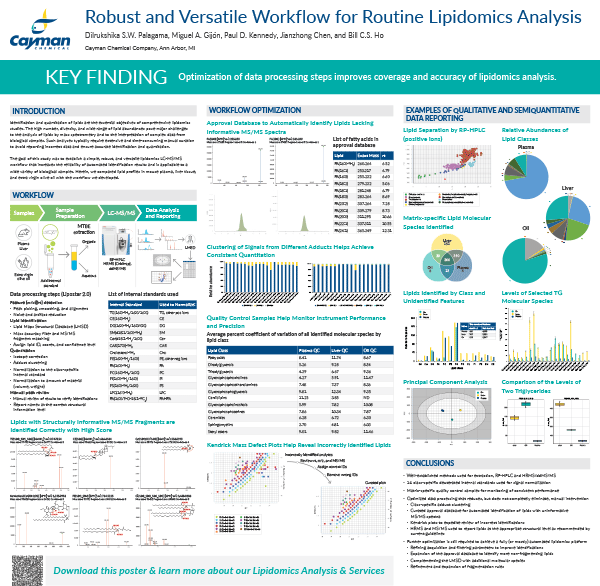
Contact Info
Cayman Chemical1180 East Ellsworth RoadAnn Arbor, Michigan 48108 USA

