
Literature & Media
Release of the EP4 Receptor Agonist KMN-159 from Scaffolds in vitro
Scientific posters
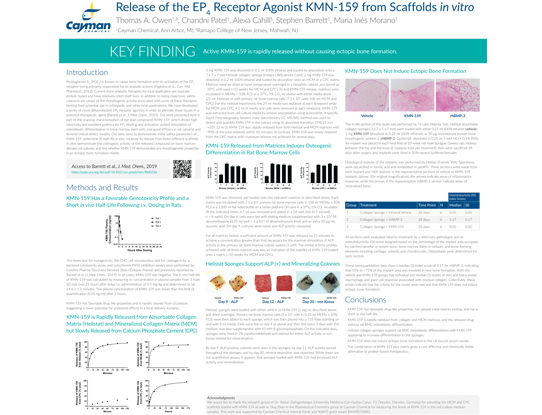
Prostaglandin E2 (PGE2) is known to cause bone formation with its activation of the EP4 receptor being primarily responsible for its anabolic actions (Pagkalos et al., Curr. Mol. Pharmacol., 2012). Current bone anabolic therapies for local application are typically protein-based and have relatively short shelf lives. In addition to being expensive, safety concerns are raised by the morphogenic activity associated with some of these therapies, limiting their potential use in orthopedic and other local applications. We have developed a series of novel difluorolactam EP4 receptor agonists in order to alleviate these issues in a potential therapeutic agent (Barrett et al., J. Med. Chem., 2019).
Do you have a question or comment for the presenter? Let us know.
To cite this poster: Owen, T.A., Patel, C., Cahill, A., et al. Release of the EP4 receptor agonist KMN-159 from scaffolds in vitro. Poster presented at: ORS 2020 Annual Meeting; February 8-11, 2020; Phoenix, AZ.



Contact Info
Cayman Chemical1180 East Ellsworth RoadAnn Arbor, Michigan 48108 USAToll Free: (800) 364-9897(USA and Canada only)Fax: (734) 971-3640