
News & Announcements
Comparative analyses of PAD expression and activity in myeloid cell lines
Comparative analyses of PAD expression and activity in myeloid cell lines
Article from 2017-07-19
Abstract
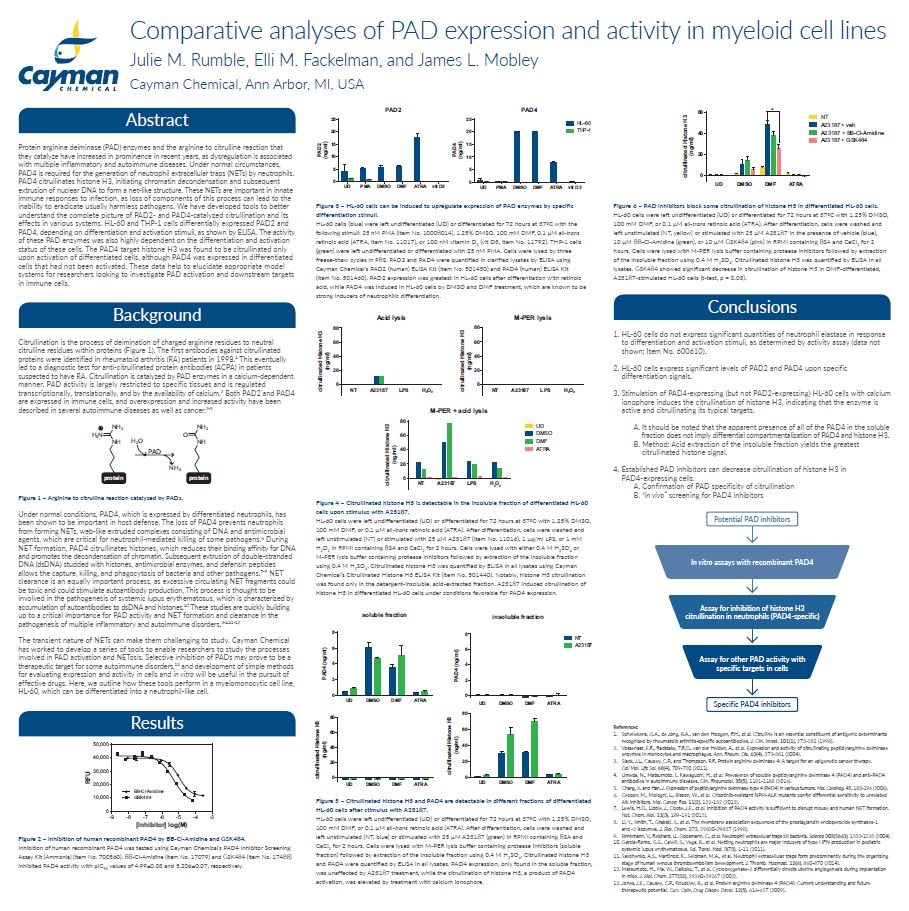
Protein arginine deiminase (PAD) enzymes and the arginine to citrulline reaction that they catalyze have increased in prominence in recent years, as dysregulation is associated with multiple inflammatory and autoimmune diseases. Under normal circumstances, PAD4 is required for the generation of neutrophil extracellular traps (NETs) by neutrophils. PAD4 citrullinates histone H3, initiating chromatin decondensation and subsequent extrusion of nuclear DNA to form a net-like structure. These NETs are important in innate immune responses to infection, as loss of components of this process can lead to the inability to eradicate usually harmless pathogens. We have developed tools to better understand the complete picture of PAD2- and PAD4-catalyzed citrullination and its effects in various systems. HL-60 and THP-1 cells differentially expressed PAD2 and PAD4, depending on differentiation and activation stimuli, as shown by ELISA. The activity of these PAD enzymes was also highly dependent on the differentiation and activation status of these cells. The PAD4 target histone H3 was found to be citrullinated only upon activation of differentiated cells, although PAD4 was expressed in differentiated cells that had not been activated. These data help to elucidate appropriate model systems for researchers looking to investigate PAD activation and downstream targets in immune cells.
Download the Poster...
Contact Info
Cayman Chemical1180 East Ellsworth RoadAnn Arbor, Michigan 48108 USAToll Free: (800) 364-9897(USA and Canada only)Fax: (734) 971-3640


