
News & Announcements
Meet the Expert: Forensic Analytical Standards
Article from 2019-02-18
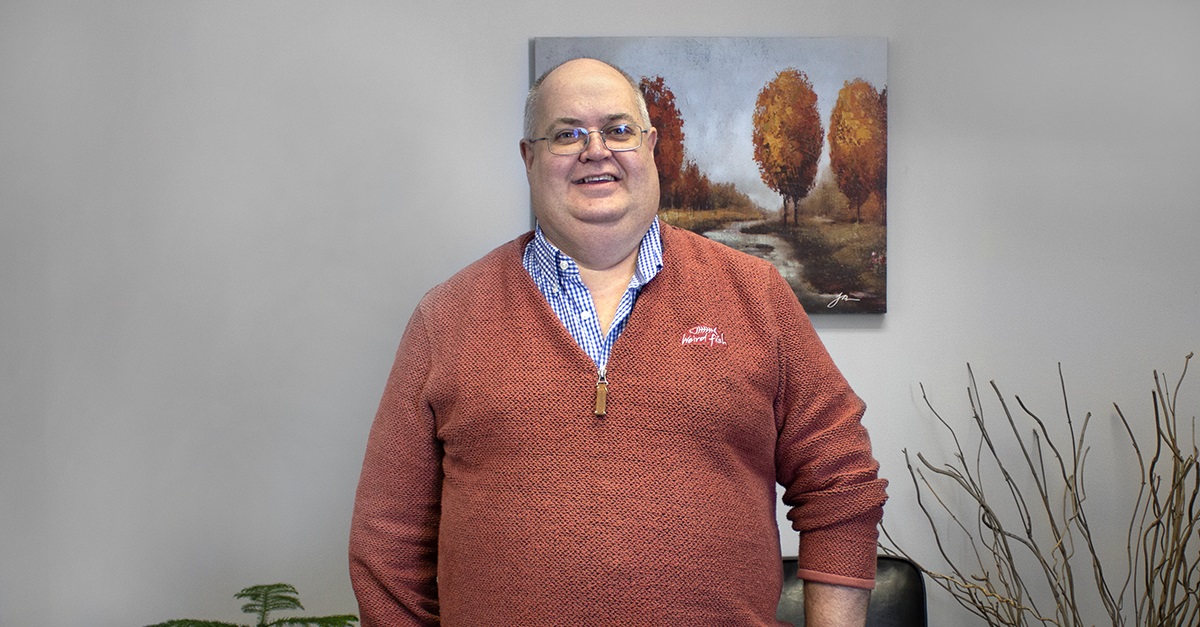
Cayman’s Forensics Division has become a leader in the field of new psychoactive substances (NPS) analysis by providing high-purity reference standards to forensic, qualified academic research institutions and other laboratories for testing. We synthesize a range of analytical standards including synthetic cannabinoids, cathinones, phenethylamines, amphetamines, indanes, opioids, benzodiazepines, tryptamines, and phytocannabinoids, among many others, to provide institutions with solutions to quickly identify and understand the physiological and toxicological properties of NPS. Recently we brought on Dr. Keith Williams to head our European analytical standards distribution. We sat down with Keith to talk about his vision for enabling the analysis capabilities of forensic chemists, toxicologists, and other stakeholders likely to encounter these NPS.
What is your background and how long have you worked in the field of forensic analysis?
I started my career in forensic toxicology and forensic science almost 30 years ago when I was carrying out a governing body-sponsored project on doping racing greyhounds. The primary aim was to improve the welfare of these elite racing animals. I was using what at that time was advanced mass spectrometry techniques to establish background steroid profiles, to determine metabolites and markers to monitor against sports doping. From there, I became a practicing forensic toxicologist at the University of Dundee, before moving to London to set up and run a new forensic toxicology unit servicing police forces and Her Majesty’s Coroner courts. I have had the pleasure of appearing as an expert witness at all levels of the court system in England and Wales, Scotland, and Northern Ireland, each of which has its own judicial system. Case types ranged from impaired driving through to complex murder/homicide cases. I have probably analysed about every matrix possible from a human for the presence of drugs and other substances over the twenty years I was practicing.
When did you start working in reference materials?
About 10 years ago, I was asked to move from this very technical role to a more commercial management environment to help develop new reference materials and drive sales of existing products. I did this initially in the area of forensic science, and more recently across all areas of organic and inorganic analysis—this included anything from forensic, environmental pharma testing to metallurgical analysis—in laboratory settings ranging from ISO:IEC 17025 accredited laboratories to facilities operating under GXP.
What brought you to Cayman? Explain your new role in the company.
My role in Cayman is really to help solve problems and to work with Cayman's Director of Forensic Chemistry, Dr. Donna Iula, and her team to make sure that laboratories across Europe can access the reference materials they need to complete their analysis for forensic and potentially related clinical investigations. As a practicing forensic scientist, I have an acute understanding of the challenges facing the analytical and interpretation processes, and as a commercial manager, I have developed an in-depth understanding of the complexity of moving materials between countries. This combined technical and commercial skill set allows me to help our customers solve their analytical problems, and consequently meet the end user needs.
What are some key challenges in the forensic analytical standards European market, and how can Cayman work to tackle these effectively?
The biggest single challenge is being able to effectively move the material, particularly controlled drugs, from country to country in a safe, legal, and timely manner. We are not dealing with a single country with 50 states, but with 30+ countries, each with its own entirely different set of rules and regulations. It can and does become a logistical nightmare. We do rely heavily on our partners to make sure that customers can access the analytical standards as easily as possible. Different countries have different patterns of drugs use and misuse. Part of my challenge is to make sure that we can meet those needs outside of the US. We are aiming to enable the correct use of reference materials to ensure that a laboratory can produce robust data that is legally defensible that then allows for appropriate interpretation.
How have you developed relationships with the forensic community?
I would like to think that I am very much still part of the forensic community, just serving it in a different way. It has certainly helped being a practicing forensic toxicologist for many years. It allows me to speak to colleagues in a common language, and I can help translate the complexities and intricacies of analytical standard use and production into something they find useful. This community is always trying to solve problems such as “What is this new substance?”, “How much of it is there in my sample?”, “What impact would it have had on the sample donor?” We at Cayman are supporting these laboratories, particularly in the area of identifying new materials appearing in the market, by producing new analytical standards quickly and effectively.
What are the tools and resources you’d like to implement to develop your new position at Cayman?
We at Cayman can develop tools, either in a traditional paper manner or in a digital format that makes the forensic scientists’ life easier in the laboratories. From posters covering chemical structure and nomenclature to apps helping in the identification of unknown materials, I have a pretty big potential list. The difficult part I think will be deciding on what is the most useful to the end users.
What are your goals for working with Dr. Donna Iula, the Director of Cayman’s Forensic Chemistry Division, to communicate Cayman’s mission to the European market?
Simple. To provide the community with the analytical standards they need, as cost-effectively as possible, within the timescales they need them.
For questions about distribution, pricing, or to contact Keith directly, contact us at sales@caymanchem.com.
MTE
Contact Info
Cayman Chemical1180 East Ellsworth RoadAnn Arbor, Michigan 48108 USAToll Free: (800) 364-9897(USA and Canada only)Fax: (734) 971-3640


