
News & Announcements
Meet the Expert: Immunopeptidome Profiling
Article from 2019-04-30
Cayman’s immunopeptidome profiling services provide efficient, cost-effective deep sequence analysis of immunogenic peptides for the identification of neoantigens and potential immunogenic sequences in biologics. Profiling the antigens involved in presentation to T cells is paramount to generating tools for targeted therapies to immune challenges. Cayman, in partnership with MS Bioworks, has developed a workflow to enable MHC Class I and MHC Class II Associated Peptide Proteomics (MAPPs). We sat down with one of our scientists, Julie Rumble, Ph.D., to discuss the work she is doing to identify novel peptide sequences in tumor tissues.
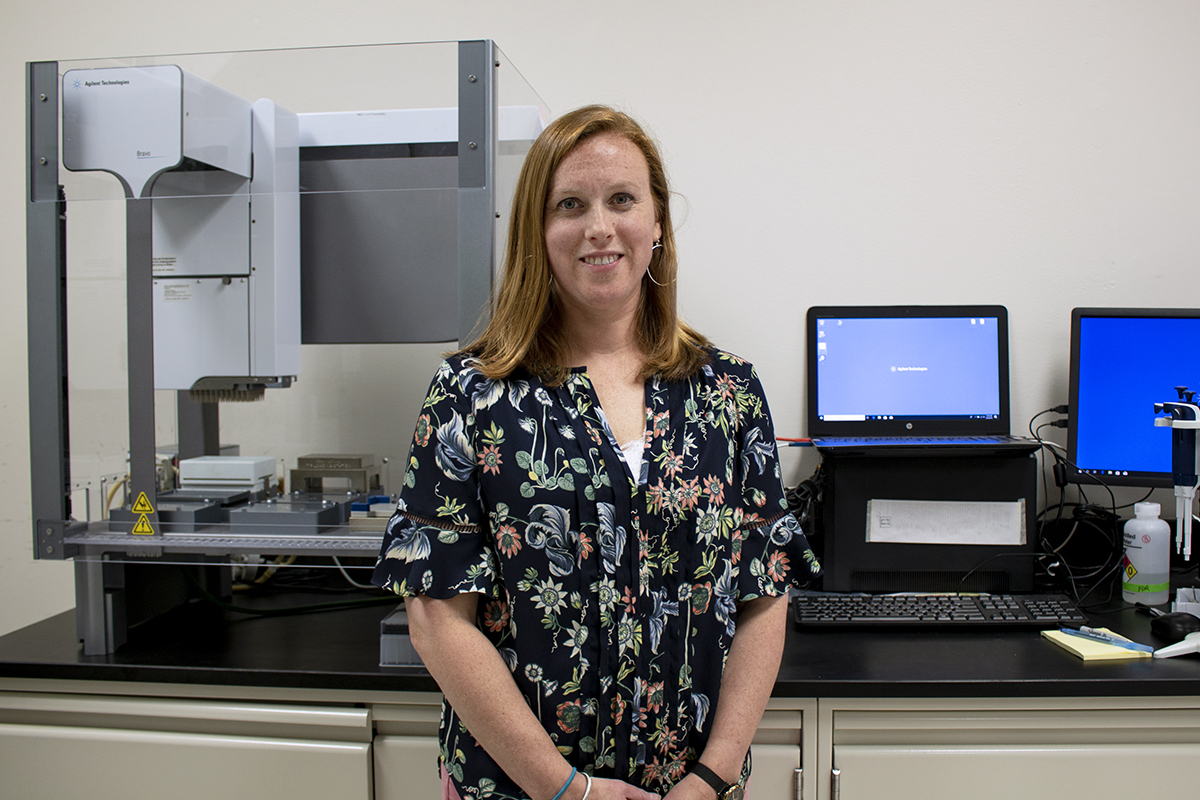
What is your background and how long have you worked in the field of immunology?
I first got excited about immunology as an undergraduate researcher at the University of Richmond and that inspired me to go on to graduate school to study this field of biology. I earned a Ph.D. in Immunology from the University of Michigan and have studied a variety of areas within the field for almost 20 years.
Your laboratory can profile the immunopeptidome of established tumor cell lines. What are the methods and instrumentation used in your workflow?
We have established protocols for isolating and sequencing MHC-associated peptides. These methods take advantage of MHC-specific antibodies, which are utilized to immunoaffinity purify MHC class I and MHC class II complexes from human tumor tissue, cell lines, and primary cells. Once we have isolated the complex, we use gentle elution conditions to collect the MHC-associated peptides from the molecule's cleft. These peptides are then subjected to LC-MS/MS analysis to identify the peptides and match those to known allele motifs. Automation of protein and peptide sample preparation using Agilent’s AssayMAP Bravo Platform enables us to increase capacity and reduce variability as we expand our capabilities. With this platform we can process up to 96 samples in a single run, using less antibody and fewer cells to yield the same results.
Explain your collaboration with MS Bioworks.
We perform the upfront biology, cell work, and sample preparation of the projects and partner with MS Bioworks, a protein mass spectrometry CRO, to complete the mass spectrometry portion. They are constantly working with us to improve the sensitivity, stringency, and yield of peptides recovered from the samples. As neighbors in the same office park, it's very helpful to have them so close to facilitate daily sample deliveries and impromptu discussions.
You have helped optimize methods to identify MHC-associated peptides from a variety of samples and MHC alleles. Within your standardized workflow, how do you remain flexible to accommodate studies with different objectives (MHC class, allele-specific studies, cell lines/tissues/modified cell lines, T cell activation, etc.)?
We are very interested in providing the highest quality data to our clients, and to this end, we have invested in quality control points in our immunoprecipitation workflow. For instance, we have developed ELISAs to evaluate the solubilization of the MHC complex in lysates as well as the depletion of that complex after the immunoaffinity isolation step. These quality control points have allowed us to efficiently develop flexible workflows for a variety of client-led objectives, from identifying neoantigens in tumor cells to probing individual HLA alleles’ presentation patterns and pinpointing immunogenic epitopes of biologic drugs.
What impact do these types of studies have on the field of immuno-oncology and drug development? Can you give some example applications?
We are standing at a very exciting time in the development of personalized medicine to treat many maladies, including cancer. We have helped identify unique peptides presented by cancer cells (called neoantigens). Vaccines could be developed against these epitopes. Harnessing the patient’s own immune system in this way could reduce our reliance on toxic chemotherapeutics. It is possible to envision, in the not-too-distant future, sequencing a tumor biopsy sample and using that information to cure that tumor with one or two flu-shot-like injections.
Another example is in the development of biologic drugs, which in many patients lose effectiveness over time due to the development of anti-drug immune responses. These immune responses eliminate the drug before it even reaches its intended target, rendering it powerless. If immunogenic epitopes can be identified during drug development, they may be able to be eliminated, increasing the effective lifetime of these important medicines.
Compared to other service providers, what makes Cayman stand out in the field of neoantigen discovery?
Cayman can provide a complete package for clients’ neoantigen discovery needs, from cell culture and transfection of single HLA alleles to immunoprecipitation of MHC from multiple species and from LC-MS/MS analysis to transcriptome sequencing. We are willing and able to work with our clients to provide the solutions that they need, rather than a one-size-fits-all approach.
Interested in profiling the immunopeptidome of your samples?
Contact our experts by emailing contractresearch@caymanchem.com.
Learn more about our service capabilities at www.caymanchem.com/services.
MTE
Contact Info
Cayman Chemical1180 East Ellsworth RoadAnn Arbor, Michigan 48108 USAToll Free: (800) 364-9897(USA and Canada only)Fax: (734) 971-3640


