
News & Announcements
Meet the Experts: Natural Products Chemistry
Article from 2019-09-26
Cayman’s Natural Products Chemistry division specializes in the extraction of relevant compounds from biological sources as well as the preparation of natural products through either biocatalytic, semi-, or total chemical synthesis. Though this field of organic chemistry provides challenging synthetic targets, purified organic compounds isolated from natural sources possess a diverse array of biological activities, making them useful as biochemical probes and lead compounds in drug discovery efforts. We talked with two of our scientists, Aaron Koch, Ph.D. and Ranga Rao Ravu, Ph.D. to discuss the work they are doing to isolate natural products. Dr. Koch has been working on methods to isolate microbial-derived antibiotics, and Dr. Ravu has been focusing on isolating novel natural products directly from various plant sources.
What is your background and how long have you worked in the field of natural products?
Dr. Koch:
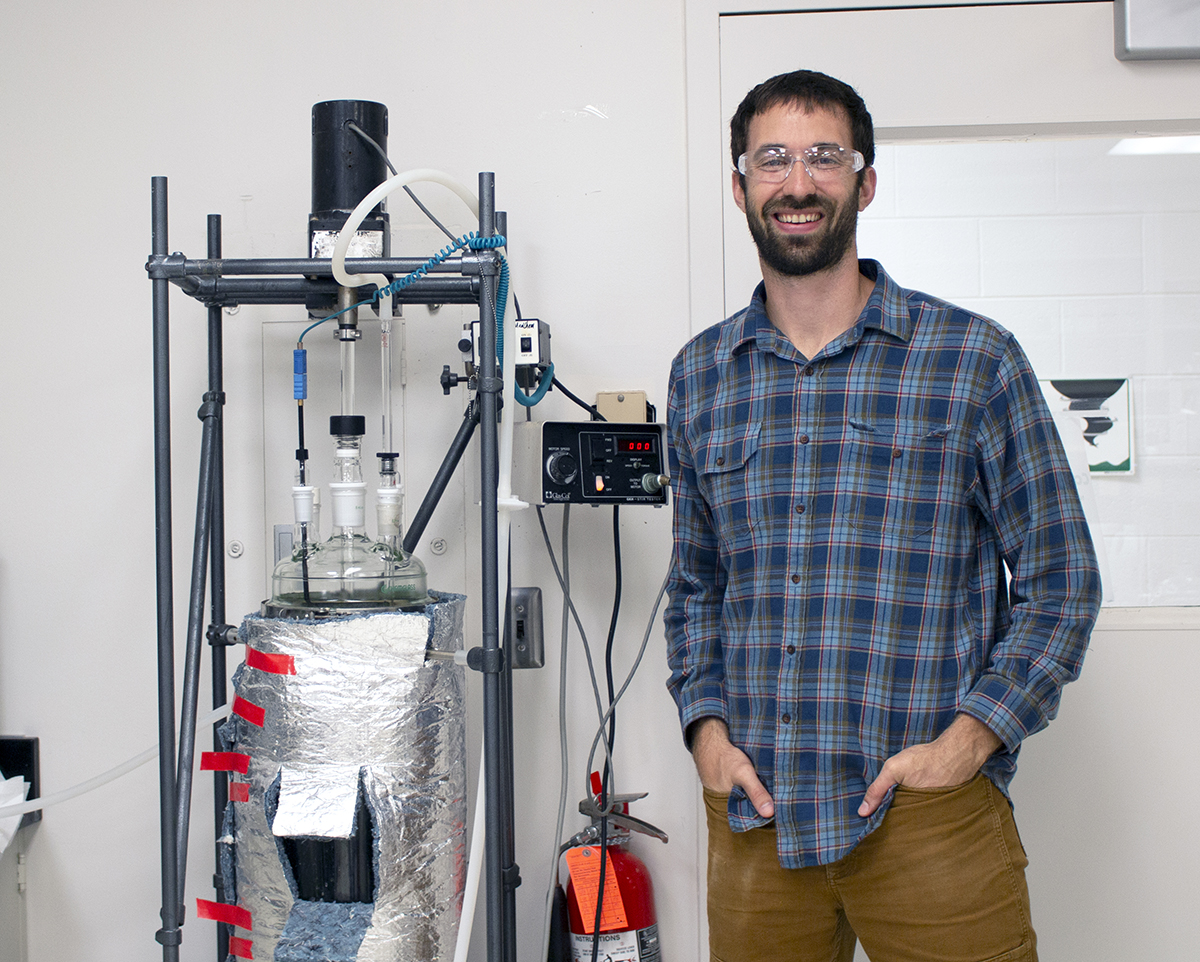
I was first exposed to natural products research in 2009 as an undergraduate at Grand Valley State University where I was developing methods for rapid detection of microcystin in environmental samples following harmful algal blooms. Following completion of my bachelor’s degree in chemistry, I further explored my passion for natural products by pursuing a doctoral degree focused on the biosynthesis and diversification of polyketide natural products under the mentorship of Dr. David Sherman at the University of Michigan.
I joined Cayman in 2017 and am currently enjoying my time as a natural products chemist responsible for the fermentation and isolation of a wide variety of bioactive natural products from bacteria and fungi. One aspect of natural products research I appreciate the most is the diverse nature of the projects encountered. Here at Cayman we get to employ a variety of techniques and skills spanning chemistry and biology to accomplish our goal of providing high-value natural products to the research community.
Dr. Ravu:
I received my master’s degree in Physical Organic Chemistry in 2003 at Osmania University in Hyderabad, India, where I completed course work and training in organic synthesis and purification of natural products. I gained considerable knowledge and solid experimental skills in my graduate studies in natural products chemistry during 2006-2010 under the guidance of Dr. J. Madhusudana Rao at the Indian Institute of Chemical Technology--Osmania University in Hyderabad, India. During my graduate studies, I conducted bioassay-guided purification and phytochemical investigation of Indian medicinal plants and discovered new bioactive natural products using a wide variety of chromatographic techniques, elucidating the structure of various classes of natural products using spectroscopic and spectrometric methods. I then developed synthetic analogs for the bioactive compounds for further studies. I started my career as a Postdoctoral Research Associate (2010-2014) at The University of Mississippi, where I continued to work on isolating and characterizating several different classes of antimicrobial active compounds from terrestrial plants, marine organisms, and microbes. I also developed synthetic approaches to synthesize lead compounds and their analogs under the supervision of Dr. Xing-Cong Li (Principal Scientist at NCNPR, Research Associate Professor of Pharmacognosy in The University of Mississippi). I also worked as an Associate Research Scientist during 2014-2016 at the University of Mississippi, where I got an opportunity to discover new lead compounds with potentially improved antifungal activity for drug development. I joined Cayman as a natural products chemist in 2016, where I am developing new chromatography techniques and separation methods for complex bioactive natural products purification under the guidance of Dr. Paul Kennedy (Director of Analytical Chemistry). Our goal is to develop products that are useful for natural product drug development companies and academic institutions.
Dr. Koch, you recently optimized methods to purify components of tunicamycin, an antibiotic with unusual properties. Walk me through your motivation to separate specific carbon chain length congeners.
Tunicamycin, an antibiotic produced by several Streptomyces species, has received a lot of attention from the research community for both its potential as an antibiotic as well as its usefulness as a probe molecule for studying the unfolded protein response, which is an exciting area of research relevant to a variety of disease states.
Tunicamycin functions by inhibiting N-linked glycosylation. It does so by preventing core oligosaccharide addition to nascent polypeptides, thereby blocking protein folding and transit through the endoplasmic reticulum (ER).
Figure adapted from original drawing by the Department of Biology at Penn State (2003).
The use of tunicamycin with whole animal cells in culture has proved a valuable tool in investigations on the biological significance of N-glycoside-linked oligosaccharides of several proteins. Tunicamycin is also a common agent used to study the effects of nucleoside antibiotics on the kidney. It is additionally used in vitro to study the effects of ER stress in various cell types.
Recent studies have indicated that the composition of the tunicamycin N-acyl chain plays a key role in its antibacterial activity as well as in the off-target eukaryotic toxicity that has impeded its development into an efficacious antibiotic.1 Furthermore, novel analogs of tunicamycin have been shown to have useful properties such as inhibition of β-lactamases and may prove useful as co-therapies with these types of drugs. Researchers at the USDA have developed two such analogs, namely TunR1 and TunR2, which are produced from tunicamycin via semi-synthesis.2
1. Dong, Y.Y., Wang, H., Pike, A.C.W., et al. Structures of DPAGT1 explain glycosylation disease mechanisms and advance TB antibiotic design. Cell 175(4), 1045-1058 (2018).
2. Price, N.P.J., Jackson, M.A., Singh, V., et al. Synergistic enhancement of beta-lactam antibiotics by modified tunicamycin analogs TunR1 and TunR2. J. Antibiot. (2019).
Alterations to the acyl chain of tunicamycin offer the opportunity to modify its properties in interesting ways, and purification of the multiple congeners of tunicamycin into individual components may also lead to novel changes in activity and function. Most of the data from these studies have been generated using tunicamycin reagents that are in fact mixtures of several structural analogs that differ in the length and branching of their N-acyl chain. The ratio of the individual components in tunicamycin differs with many factors encountered during its production. Because there wasn’t material available to analyze or control for these differences, we were motivated to expand our product line by featuring purified tunicamycin congeners as well as to enhance the quality of our tunicamycin mixture by characterizing the ratio of each component.
What were the challenges you faced to achieve the separation and how many different tunicamycins were you able to produce?
There were several obstacles in developing a method to separate out the various molecular species of tunicamycin into mixtures of congeners containing specific acyl chain lengths. The first challenge was identifying combinations of Streptomyces strains and fermentation conditions that would bias the biosynthetic production toward a desired congener. After overcoming that first hurdle, the next step was to process the extracted crude tunicamycin mixture by isolating the individual acyl chain congeners. This was accomplished through a combination of normal and reversed-phase chromatography techniques. The end result was isolation of four different congener profiles with N-acyl chain lengths ranging from 14 to 17 carbon atoms.
| Item No. | Product Name |
| 28355 | Tunicamycin 14:1 |
| 28356 | Tunicamycin 15:1 |
| 28357 | Tunicamycin 16:1 |
| 28358 | Tunicamycin 17:1 |
Having a set of tunicamycin products with defined acyl chain length and double bond number will allow researchers to test the properties of these acyl chain isomers. These specific congener mixes may improve activity and reproducibility of studies that have previously used the traditional and less-characterized tunicamycin mixture.
What testing do you perform on this suite of tunicamycin products to certify that the mixture of isomers that are produced are very similar from batch to batch, ensuring consistency of the product?
As with all of the natural products we offer at Cayman, the tunicamycin family of products goes through a rigorous examination to ensure product quality and purity. This is accomplished using a variety of analytical techniques tailored to the analyte in question, including TLC, HPLC, LC-MS, and NMR analysis. The tunicamycin products containing purified congeners are analyzed for purity by HPLC and validated to only contain structural isomers with an N-acyl chain of a given length by mass spectrometry and NMR. Additionally, the tunicamycin mixture we offer is validated for batch-to-batch consistency by comparing the relative ratios of each congener in the mixture.
Dr. Ravu, you’ve performed extractions from leaves, fruits, nuts, and seeds to generate such compounds as garcinol, mitragynine, withaferin A, various anacardic acids, and certain cardanols. Why is it necessary to extract these compounds from nature?
Each of these compounds you mentioned has a storied level of difficulty in conducting full chemical synthesis. For example, garcinol, a polyisoprenylated benzophenone, cannot be easily synthesized because of its complexity and stereochemistry. Its total synthesis requires 13 steps, wherein four stereoisomers are obtained. Purifying these four isomers from the reaction mixture is extremely difficult and requires chiral column chromatography for the end purification. Alternatively, extraction from natural sources greatly simplifies this process as the natural source contains the desired stereoisomer.
What is one of the more unique plant-derived substances you’ve worked with?
The cashew nut shell liquid we source for the anacardic acids and cardanols is a waste byproduct from the cashew industry that has been marketed for multiple uses. Anacardic acids are very sensitive compounds that are difficult to extract, requiring a specific type of processing of the cashew shell to prevent their degradation. Anacardic acids vary in their alkyl chain length and double bond number, with each pure compound possessing unique properties. Through our proprietary processing, we have successfully isolated these highly pure individual anacardic acid and cardanol congeners, and their novel properties are currently being studied.
| Item No. | Product Name |
| 13144 | Anacardic Acid |
| 18422 | Anacardic Acid monoene |
| 22663 | Anacardic Acid diene |
| 26611 | Anacardic Acid triene |
| Item No. | Product Name |
| 23154 | Cardanol monoene |
| 23153 | Cardanol diene |
| 23155 | Cardanol triene |
Why are researchers interested in using highly purified anacardic acids with varying degrees of polyunsaturation?
As the first reported natural product inhibitor of histone acetyltransferase (HAT) activities, anacardic acids have been shown to inhibit the activity of p300, PCAF, and TIP60 HATs at a low micromolar range in in vitro cell-free assays. These actions have potential preventive roles against cancer development. Additionally, anacardic acids are capable of affecting other clinically targeted enzymes such as lipoxygenases, xanthine oxidase, tyrosinase, ureases, and matrix metalloproteinases. Some also have reported molluscicidal, schistosomicidal, and antimicrobial activities. 3
3. Alvarenga, T.A., de Oliveira, P.F., de Souza, J.M., et al. Schistosomicidal activity of alkyl-phenols from the cashew Anacardium occidentale against Schistosoma mansoni adult worms. J. Agric. Food Chem.64(46), 8821-8827 (2016).
What makes Cayman stand out in the field of natural products?
Cayman’s very first products were prostaglandins, potent pro-inflammatory lipids isolated from gorgonian coral growing in the Cayman Islands. These prostaglandins, which we’ve gone on to develop full synthetic routes for since they were first isolated in 1980, are still a critically important class of natural products involved in many areas of disease research. Cayman continues its long tradition of offering natural products to the research community in its dedicated Natural Products laboratory where experts in cell culture, plant extraction, chemical synthesis, and analytical chemistry are constantly developing new procedures and novel products such as tunicamycins and anacardic acids. Our scientists put their knowledge to work to complete the difficult isolation or develop the most reasonable synthesis routes to help make your research possible.
View all our natural products.
Have a custom synthesis request? Learn more about our Chemical Synthesis services.
You May Also Be Interested In
Natural Products: Microbial Metabolites
MTE
Contact Info
Cayman Chemical1180 East Ellsworth RoadAnn Arbor, Michigan 48108 USAToll Free: (800) 364-9897(USA and Canada only)Fax: (734) 971-3640


