
News & Announcements
Plasma Ceramides as Disease-Risk Markers
Article from 2018-04-11
New research has revealed that elevated circulating ceramide levels correlate strongly with future major adverse cardiovascular events. Three specific ceramides—C16:0, C18:0, and C24:1—were shown to be independently predictive of atherosclerotic plaque instability and/or death (Figure 1). In fact, quantifying increases of these particular ceramides in plasma may surpass the prognostic value of more conventional biomarkers: LDL and HDL cholesterol, c-reactive protein, and lipoprotein-associated phospholipase A2.1-6 Elevated ceramide levels can be detected within one to five years before a cardiac event in apparently healthy individuals.7 To begin to identify patients at risk of future major adverse events, the Mayo Clinic introduced CERAM, a diagnostic test to quantify individual plasma ceramides and determine their ratio to a seemingly cardioprotective C24:0 ceramide.
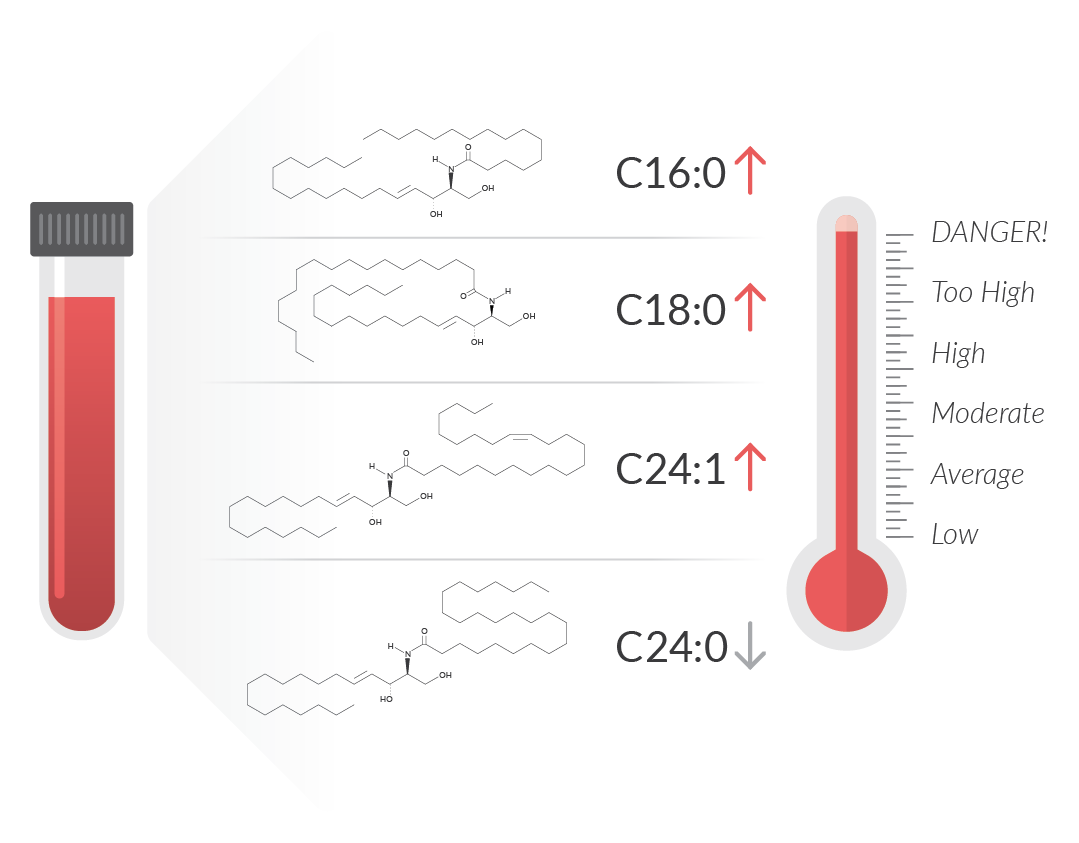
Figure 1. Ceramide profiling in blood predicts adverse cardiac events.
Cayman offers high purity versions of these ceramides as well as their deuterated counterparts to be used as research standards for GC- or LC-MS quantification to determine the ratios of these key ceramide species.
- C16 Ceramide (d18:1/16:0)
- C16 Ceramide-d7 (d18:1-d7/16:0)
- C18 Ceramide (d18:1/18:0)
- C18 Ceramide-d7 (d18:1-d7/18:0)
- C24:1 Ceramide (d18:1/24:1 (15Z))
- C24:1 Ceramide-d7 (d18:1-d7/24:1 (15Z))
- C24 Ceramide (d18:1/24:0)*
- C24 Ceramide-d7 (d18:1-d7/24:0)
* C24:0 Ceramide alone has not been independently associated with disease, but its ratio to C16:0, C18:0, and C24:1 ceramides may hold predictive value.2,6
Since serum ceramides are ~1,000-fold less abundant than serum cholesterol, development of the Mayo Clinic test was not possible until the advent of highly sensitive mass spectroscopy procedures. Indeed, advances in ceramide research tools will likely lead to important discoveries for many different diseases. For instance, elevated concentrations of circulating C18:0, C20:0, and C24:1 ceramides and total dihydroceramide are associated with type 2 diabetes, whereas C16:0 ceramide and C18:0 sphingomyelin correlate with insulin resistance.8 Cayman offers high purity versions of C20 Ceramide (d18:1/20:0), C18 dihydro Ceramide (d18:0/18:0), C18 Sphingomyelin (d18:1/18:0), and many others to be used as research standards.
Plasma ceramides are modifiable risk markers
Having the ability to monitor plasma ceramide ratios leads to the question of how to reduce them if dangerous levels are identified. Will inhibiting their biosynthesis ameliorate disease? De novo ceramides are produced from saturated fats by one of six ceramide synthases (CerSs), which have different tissue distribution and selectivity for fatty acyl CoA (Figure 2).
Figure 2. The steps of ceramide synthesis involve different members of the CerS family. Inhibition of serine palmitoyltransferase, CerS, and/or, several downstream enzymes is a major focus to decrease inflammatory ceramides.
Ceramides are also salvaged from sphingosine or more complex glucosylceramides and can be produced by sphingomyelin hydrolysis (Figure 2). With distribution in all tissues throughout the body, they perform essential roles in cell membrane integrity, cellular stress responses, inflammatory signaling, and apoptosis. Excess consumption of saturated fatty acids can lead to increased ceramide production.8 Dyslipidemia and metabolic dysfunction result when ceramides accumulate in tissues not suited for lipid storage (e.g., the liver and muscle) and likely play a role in the development of non-alcoholic fatty liver disease.9 Evidence shows that ceramide concentrations can be reduced by current cardiovascular therapies including statins, ezetimibe, and proprotein convertase subtilisin/kexin type 9 (PCSK9) activity inhibitors.4,10
Inhibiting ceramide synthesis is also a possible route for disease modulation. Because ceramides and their sphingolipid products are involved in multiple cellular processes (both deleterious and protective), concerns exist, though, about possible risks or adverse effects resulting from overall inhibition of ceramide synthesis for treatment of chronic diseases. That is why scientists are working to understand how various CerS can be specifically targeted through highly selective inhibition. For example, it has been shown that using CerS6 anti-sense oligonucleotides to knock-down CerS6 in ob/ob mice (which have elevated C16:0 ceramide levels) is protective against weight gain and improves insulin resistance.11 These mice exhibit increased energy expenditure (without increases in mobility), improved glucose tolerance, and reduced adiposity. CerS6-dependent C16:0 ceramide synthesis represents one distinct and highly attractive target to treat obesity and type 2 diabetes, at least in rodent models. But much work is yet to be done to understand where and when specific ceramides are made by the individual CerS, even within an individual cell. Connecting this piece of the puzzle will lead to the discovery of an arsenal of selective CerS inhibitors.
As experts in the field of lipid sciences, Cayman is here to help make this critical research possible by offering many different ceramide and sphingolipid standards as well as inhibitors for the various enzymes driving key events in ceramide synthesis.
References
1. Summers, S.A. Could ceramides become the new cholesterol? Cell Metab. (2017).
2. Cheng, J.M., Suoniemi, M., Kardys. I., et al. Plasma concentrations of molecular lipid species in relation to coronary plaque characteristics and cardiovascular outcome: Results of the ATHEROREMO-IVUS study. Atherosclerosis 243(2), 560-566 (2015).
3. Pan, W., Yu, J., Shi, R., et al. Elevation of ceramide and activation of secretory acid sphingomyelinase in patients with acute coronary syndromes. Coron. Artery Dis. 25(3), 230-235 (2014).
4. Tarasov, K., Ekroos, K., Suoniemi, M., et al. Molecular lipids identify cardiovascular risk and are efficiently lowered by simvastatin and PCSK9 deficiency. J. Clin. Endocrinol. Metab. 99(1), E45-E52 (2014).
5. Spijkers, L.J.A., van den Akker, R.F.P., Janssen, B.J.A., et al. Hypertension is associated with marked alterations in sphingolipid biology: A potential role for ceramide. PLoS One 6(7), e21817 (2011).
6. Laaksonen, R., Ekroos, K., Sysi-Aho, M., et al. Plasma ceramides predict cardiovascular death in patients with stable coronary artery disease and acute coronary syndromes beyond LDL-cholesterol. Eur. Heart J. 37(25), 1967-1976 (2016).
7. Havulinna, A.S., Sysi-Aho, M., Hilvo, M., et al. Circulating ceramides predict cardiovascular outcomes in the population-based FINRISK 2002 cohort. Arterioscler. Thromb. Vasc. Biol. 36(12), 2424-2430 (2016).
8. Bergman, B.C., Brozinick, J.T., Strauss, A., et al. Serum sphingolipids: Relationships to insulin sensitivity and changes with exercise in humans. Am. J. Physiol. Endocrinol. Metab. 309(4), E398-E408 (2015).
9. Kasumov,T., Li, L., Li, M., et al. Ceramide as a mediator of non-alcoholic fatty liver disease and associated atherosclerosis. PLoS One 10(5), e0126910 (2015).
10. Ng, T.W.K., Ooi, E.M.M., Watts, G.F., et al. Dose-dependent effects of rosuvastatin on the plasma sphingolipidome and phospholipidome in the metabolic syndrome. J. Clin. Endocrinol. Metab. 99(11), E2335-E2340 (2014).
11. Bielohuby, M., Prakash, S., Brunner, B., et al. Ceramide synthase 6 inhibition as a novel therapeutic approach for obesity and type 2 diabetes. Presented at Society for Endocrinology ECE 2017, Lisbon, Portugal. Endocrine Abstracts 49 GP105 (2017).
Contact Info
Cayman Chemical1180 East Ellsworth RoadAnn Arbor, Michigan 48108 USAToll Free: (800) 364-9897(USA and Canada only)Fax: (734) 971-3640


