
News & Announcements
Precision Cannabis Testing
Article from 2019-08-08
By Roxanne Franckowski
This article was originally published in the July/August edition of Grow Opportunity.
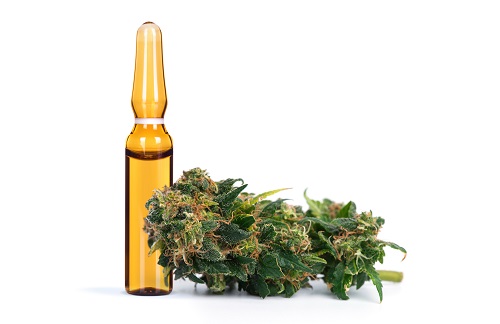
As the cannabis industry is now a multibillion-dollar global market and will only continue to grow as more jurisdictions legalize medicinal and/or recreational cannabis products, consumer safety is of the utmost importance. To ensure product safety, as with any product intended for human use, various governments, regulatory bodies, and stakeholders are working towards standardization within the industry. This is best accomplished by quality control testing of cannabis, including potency determination. Undoubtedly, the quality of these test results is influenced by the proficiency of the laboratory staff, conditions in the laboratory, maintenance of analytical instrumentation, and the reliability of the reference materials used. Cannabis testing laboratories that follow a rigorous quality system, such as those accredited under ISO/IEC 17025, offer confidence in the identification of key components and accuracy of quantitative measurements.
International Standard
ISO/IEC 17025 accredited laboratories establish metrological traceability of measurements made during analysis. With metrological traceability, as defined in ISO/IEC Guide 99, a result is “related to a reference through a documented, unbroken chain of calibrations, each contributing to measurement uncertainty.” Having a measurement with metrological traceability is important because it gives the end-user assurance that the reported measurement agrees with results obtained from other laboratories using the same standard. Without metrological traceability, the measurement provided may be skewed, providing an inaccurate result that, if not caught, has the potential to cause harm to the consumer. Metrological traceability is maintained using properly calibrated equipment, and, when available, certified reference materials (CRMs). CRMs are produced by reference material producers (RMPs) accredited to ISO 17034—the international standard governing the general requirements for the competence of reference material producers.
To identify and quantitatively measure the components found in a cannabis product, CRMs are available as single-component or multi-component solutions. These CRMs may be used to create calibrators and/or control samples. ISO 17034 CRMs are guaranteed to be metrologically traceable. Together with properly maintained instrumentation, CRMs will ensure that the results will be consistent and accurate. RMPs with ISO 17034 accreditation must adhere to a list of requirements before producing a CRM. Each step of CRM production is planned (from the selection of the neat material on through the assessment of long-term stability), and acceptance criteria are specified to ensure consistency of the product throughout the lifespan of CRM batches.
How It’s Made
When a CRM is manufactured, the RMP first evaluates the neat material to verify its identity and overall purity, as this will be used to calculate the certified concentration of the CRM. Next, a compatible solvent is carefully considered. Solvent selection is critical to the overall accuracy and stability of the CRM. An incompatible solvent will negatively impact the CRM. For example, if the neat material is not fully soluble or precipitates out over time, then the CRM is not sufficiently homogeneous; if the solvent is too acidic, this could cause steep degradation of the material, impacting the stability.
The neat material and solvent are measured using calibrated equipment to provide the metrologically traceable solution with certified concentration and corresponding measurement uncertainty. Once the solution is produced and packaged, the concentration and homogeneity of the CRM is verified by selecting random ampules throughout the batch for screening. For multi-component CRM solutions, compound incompatibilities within the mixture are evaluated. For instance, even if single-component CRMs show stability for several years, when placed in a multi-component solution, interactions between the components may cause an accelerated degradation, rendering the solution inaccurate. Stability of the CRM is monitored first to determine the optimal storage and shipping conditions and then over a longer period for long-term storage.
Not all cannabis testing laboratories are ISO/IEC 17025 accredited. Nevertheless, laboratories doing any type of quantitative measurement will benefit from using ISO 17034 CRMs in their analysis. RMPs take rigorous steps to ensure that CRMs are adequately characterized, stable, homogenous, and metrologically traceable, making CRMs ideal for quantitative analysis. RMPs must provide this information in a certificate of analysis, which includes the certified property value, the associated uncertainty of the material, and instructions for proper use. Testing laboratories should look for the ISO 17034 accreditation logo and/or accreditation number on the certificates of analysis to ensure that the solution being used is a CRM.
The decision to use single- or multi-component CRM solutions comes down to the individual laboratory’s policies, procedures, and preferences. For example, single-component CRM solutions offer versatility to the laboratory by allowing the creation of their own multi-component control sample at varying concentrations. Alternatively, depending on how many components need to be evaluated, having a pre-made multi-component CRM solution may be ideal when creating calibration standards. They offer the benefit of reducing dilution errors, materials consumed, and preparation time. RMPs are willing to work with customers to create custom multi-component solutions that fit specific testing requirements.
No matter where you are in the cannabis product supply chain, odds are you are either providing or relying on quantitative analysis. The use of CRMs by well-trained staff, under appropriate laboratory conditions, allows for confidence in the accuracy of analytical results. After all, the quality control testing of products is only as accurate as the quality of analysis.
Cayman’s Phytocannabinoid Single CRMs and Mixtures
Cayman offers a suite of ISO 17034-produced single CRMs and multi-component CRM mixtures designed and engineered to the highest standards to give you confidence in your analytical data. While offering simplicity in its use, these materials provide highly accurate and precise data when used with proper methodology.
Search our Phytocannabinoid CRMs and Mixtures
Contact Info
Cayman Chemical1180 East Ellsworth RoadAnn Arbor, Michigan 48108 USAToll Free: (800) 364-9897(USA and Canada only)Fax: (734) 971-3640


