
Technical Support & Resources
Visit our FAQ
Contact Us
Toll Free Phone (USA and Canada Only): (888) 526-5351
Direct Phone: (734) 975-3888
Product Categories
Research Area
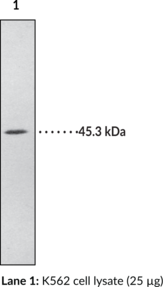
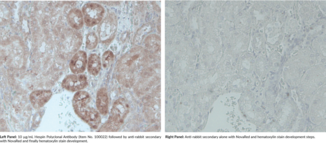
Technical Information
Shipping & Storage Information
Recommended Products
Certificates of Analysis & Batch Specific Data
Provide batch numbers separated by commas to download or request available product inserts, QC sheets, certificates of analysis, data packs, and GC-MS data.

Visit Our Cancer Resource Center
Find Tools & Resources to Study the Hallmarks of Cancer
- Cancer cell signaling & regulation
- Cancer metabolism
- Tumor microenvironment
Product Description
Hepsin is a type II membrane-associated protein that has an extracellular proteolytic domain and exhibits low sequence homology to other known proteases.1,2 Hepsin overexpression is observed in prostate, breast, kidney, and ovarian cancers and due to low homology to other known proteases may provide a unique target for pharmacological therapy.3,4,5,6,7 Hepsin is necessary for cell growth in vitro and may play a role in metastatic expansion by factor VII activation.8,9,6 Cayman Chemical’s hepsin polyclonal antibody can be used for WB and IHC (formalin-fixed paraffin-embedded tissue) analysis for hepsin on samples of human origin. Other applications for use of this antibody have not yet been tested.
WARNING This product is not for human or veterinary use.
References & Product Citations
1. Hepsin, a cell membrane-
2. A novel trypsin-
3. Delineation of prognostic biomarkers in prostate cancer. Nature 412(6849), 822-826 (2001).
4. Expression profiling reveals hepsin overexpression in prostate cancer. Cancer Res. 61(15), 5692-5696 (2001).
5. Analysis of gene expression identifies candidate markers and pharmacological targets in prostate cancer. Cancer Res. 61(16), 5974-5978 (2001).
6. Expression of the factor VII activating protease, hepsin, in situ in renal cell carcinoma. Thromb. Haemost. 79(4), 876-877 (1998).
7. Hepsin, a cell surface serine protease identified in hepatoma cells, is overexpressed in ovarian cancer. Cancer Res. 57(14), 2884-2887 (1997).
8. Hepsin, a putative membrane-
9. Hepsin, a putative cell-
Contact Info
Cayman Chemical1180 East Ellsworth RoadAnn Arbor, Michigan 48108 USAToll Free: (800) 364-9897(USA and Canada only)Fax: (734) 971-3640


