
Technical Support & Resources
Visit our FAQ
Contact Us
Toll Free Phone (USA and Canada Only): (888) 526-5351
Direct Phone: (734) 975-3888
Product Categories
Product Type
Application
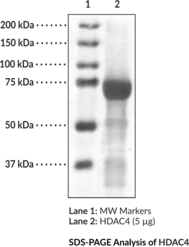
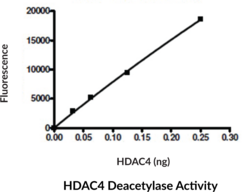
Technical Information
- Histone Deacetylase 4
Shipping & Storage Information
Recommended Products
Certificates of Analysis & Batch Specific Data
Provide batch numbers separated by commas to download or request available product inserts, QC sheets, certificates of analysis, data packs, and GC-MS data.

Neutrophil Biology Wall Poster
Explore how neutrophils shape the immune response in health and disease. This poster highlights neutrophil pathogen defense mechanisms, including phagocytosis, degranulation, and NETosis, as well as neutrophil roles in inflammation and NET-associated pathologies.
DOWNLOAD NOWProduct Description
Histone deacetylase 4 (HDAC4) is a zinc-dependent metalloenzyme and class IIa HDAC.1 It is composed of an N-terminal regulatory domain, which contains a myocyte-specific enhancer factor 2 (MEF2) binding site, three 14-3-3 binding sites, a nuclear localization signal, and a caspase-3 cleavage site, a catalytic domain, and a C-terminal domain that contains a nuclear export signal. HDAC4 shuttles between the cytoplasm and nucleus and is mainly expressed in skeletal muscle, brain, ovaries, and colon but is also found in the small intestine, heart, kidney, testis, thymus, and leukocytes.2,3 It acts as a transcriptional corepressor and has many binding partners, including the transcription factors MEF2 and RUNX family transcription factor 2 (RUNX2).1,4 Knockout of Hdac4 induces premature ossification and chondrocyte hypertrophy in mice.4 Mutations in HDAC4 are associated with brachydactyly-mental retardation syndrome, a disorder characterized by brachydactyly type E, intellectual disability, and facial dysmorphisms.5 Cayman’s HDAC4 (human, recombinant) protein can be used for enzyme activity assays.
WARNING This product is not for human or veterinary use.
References & Product Citations
1. Class II histone deacetylases: From sequence to function, regulation, and clinical implication. Mol. Cell. Biol. 25(8), 2873-2884 (2005).
2. Regulation of histone deacetylase 4 by binding of 14-
3. HDAC4, a human histone deacetylase related to yeast HDA1, is a transcriptional corepressor. Mol. Cell. Biol. 19(11), 7816-7827 (1999).
4. Histone deacetylase 4 controls chondrocyte hypertrophy during skeletogenesis. Cell 119(4), 555-566 (2004).
5. Missense substitutions at a conserved 14-
Contact Info
Cayman Chemical1180 East Ellsworth RoadAnn Arbor, Michigan 48108 USAToll Free: (800) 364-9897(USA and Canada only)Fax: (734) 971-3640


