
Technical Support & Resources
Information provided in the product description is from published literature. Due to the nature of scientific experimentation, your results (e.g., selectivity and effective concentrations) or specific application for this product may differ. If you have questions about how this product fits your application, please contact our technical support staff.
Visit our FAQ
Contact Us
Toll Free Phone (USA and Canada Only): (888) 526-5351
Direct Phone: (734) 975-3888

Technical Information
- C12-HSL
- dDHL
Shipping & Storage Information
Recommended Products
Certificates of Analysis & Batch Specific Data
Provide batch numbers separated by commas to download or request available product inserts, QC sheets, certificates of analysis, data packs, and GC-MS data.
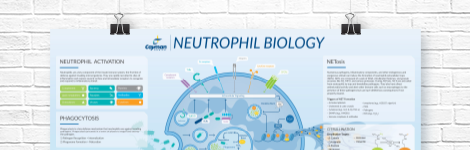
Neutrophil Biology Wall Poster
Explore how neutrophils shape the immune response in health and disease. This poster highlights neutrophil pathogen defense mechanisms, including phagocytosis, degranulation, and NETosis, as well as neutrophil roles in inflammation and NET-associated pathologies.
DOWNLOAD NOWProduct Description
Quorum sensing is a regulatory system used by bacteria for controlling gene expression in response to increasing cell density. Controlling bacterial infections by quenching their quorum sensing systems is a promising field of study. The expression of specific target genes, such as transcriptional regulators belonging to the LuxR family of proteins, is coordinated by the synthesis of diffusible acylhomoserine lactone (AHL) molecules. N-dodecanoyl-L-Homoserine lactone (C12-HSL) is a small diffusible signaling molecule involved in quorum sensing, thereby controlling gene expression and affecting cellular metabolism in bacteria.1,2,3 In addition to regulating bacterial functions, C12-HSL activates NF-κB in RAW 264.7 macrophages, increasing the expression of TNF-α, interleukin-1β (IL-1β), and IL-8, while other lactones do not.4 In addition, C12-HSL alters cell cycling and metabolism of human keratinocyte (HaCaT) cells.5 It is important to note that C12-HSL is distinct from N-3-oxo-dodecanoyl-L-homoserine lactone (Item No. 10007895), which is produced at different times in biofilm development and has different cellular effects.5,6
WARNING This product is not for human or veterinary use.
References & Product Citations
1. Multiple N-
2. The regulatory locus cinRI in Rhizobium leguminosarum controls a network of quorum-
3. Quorum-
4. Mouse and human cell activation by N-
5. The Pseudomonas aeruginosa autoinducer dodecanoyl-
6. Evidence for the dynamics of acyl homoserine lactone and AHL-
Characterization of N-
Contact Info
Cayman Chemical1180 East Ellsworth RoadAnn Arbor, Michigan 48108 USAToll Free: (800) 364-9897(USA and Canada only)Fax: (734) 971-3640


