
A neutrophil chemoattractant
Technical Support & Resources

Information provided in the product description is from published literature. Due to the nature of scientific experimentation, your results (e.g., selectivity and effective concentrations) or specific application for this product may differ. If you have questions about how this product fits your application, please contact our technical support staff.

Visit our FAQ

Contact Us

Toll Free Phone (USA and Canada Only): (888) 526-5351
Direct Phone: (734) 975-3888

Request Technical Support

Technical Support Request

To streamline the process attach the appropriate questionnaire to your inquiry.

Download IHC QuestionnaireDownload WB Questionnaire

View Our Privacy Statement for details on how we use and protect your data. In addition, this site is protected by hCaptcha and its Privacy Policy and Terms of Service apply.

Product Categories

N-acetyl-Pro-Gly-Pro Peptide

Item No. 11189

Technical Information
Synonyms
  • N-acetyl-PGP
Formula Weight
311.3
Purity
≥95% by HPLC
Amino Acids
N-terminal acetylated-PGP
A lyophilized powder
Water: 1 mg/ml
Shipping & Storage Information
Storage
-20°C
Shipping
Room temperature in continental US; may vary elsewhere
Recommended Products

Certificates of Analysis & Batch Specific Data

Provide batch numbers separated by commas to download or request available product inserts, QC sheets, certificates of analysis, data packs, and GC-MS data.
    Add

    Add

    Cayman Chemical
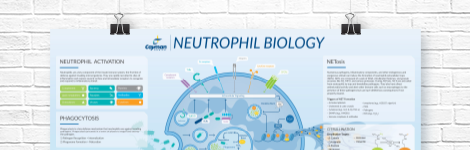
    Neutrophil Biology Wall Poster

    Explore how neutrophils shape the immune response in health and disease. This poster highlights neutrophil pathogen defense mechanisms, including phagocytosis, degranulation, and NETosis, as well as neutrophil roles in inflammation and NET-associated pathologies.

    DOWNLOAD NOW
    Product Description

    N-acetyl-Pro-Gly-Pro (N-acetyl-PGP) is a tripeptide that functions as a neutrophil chemoattractant.1,2 N-acetyl-PGP and PGP induce the recruitment of neutrophils (PMN) through stimulation of chemokine CXC receptors.2 N-acetyl-PGP is derived from the breakdown of extracellular matrix (ECM) and shares sequence and structural homology with a domain on alpha chemokines.2 Breakdown of collagen in the lungs leading to the production of PGP metabolites. Such metabolites have been seen in substantially higher concentrations from bronchoalveolar lavage (BAL) samples of individuals with chronic obstructive pulmonary disease (COPD) and cystic fibrosis relative to control patients.1 The increased production of the pro-inflammatory PGP exacerabates the inflammatory process leads to increased neutrophil recruitment in airway inflammation. These data suggest that N-acetyl-PGP or PGP may be useful biomarkers and potential therapeutic targets for neutrophilic inflammatory diseases.3

    WARNING This product is not for human or veterinary use.

    References & Product Citations
    Product Description References

    1. O'Reilly, P., Jackson, P.L., Noerager, B., et alN-α-PGP and PGP, potential biomarkers and therapeutic targets for COPD. Respir. Res. 10, 1-8 (2009).

    2. Weathington, N.M., van Houwelingen, A.H., Noerager, B.D., et alA novel peptide CXCR ligand derived from extracellular matrix degradation during airway inflammation. Nat. Med. 12(3), 317-323 (2006).

    3. Yoon, H.I., and Sin, D.D. Biomarkers of therapeutic response in patients with chronic obstructive pulmonary disease: A critical review of the literature. Drugs 71(14), 1821-1837 (2011).

