
For immunochemical analysis of caspase-9
Technical Support & Resources

Visit our FAQ

Contact Us

Toll Free Phone (USA and Canada Only): (888) 526-5351
Direct Phone: (734) 975-3888

Request Technical Support

Technical Support Request

To streamline the process attach the appropriate questionnaire to your inquiry.

Download IHC QuestionnaireDownload WB Questionnaire

View Our Privacy Statement for details on how we use and protect your data. In addition, this site is protected by hCaptcha and its Privacy Policy and Terms of Service apply.

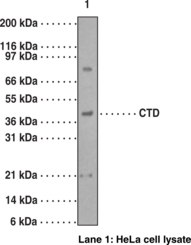
Caspase-9 (carboxy-terminal divergent) Polyclonal Antibody

Item No. 13915
Technical Information
Synonyms
  • CTD
Immunogen
mixture of synthetic peptides corresponding to rat caspase-9 amino acids 345-359 and 366-383
IgG in 200 µl PBS containing 0.05% BSA and 0.05% sodium azide
Host
Rabbit
Applications
WB
Species Reactivity
(+) Human Caspase-9(+) Mouse Caspase-9(+) Rat Caspase-9
Shipping & Storage Information
Storage
-20°C
Shipping
Wet ice in continental US; may vary elsewhere
Recommended Products

Certificates of Analysis & Batch Specific Data

Provide batch numbers separated by commas to download or request available product inserts, QC sheets, certificates of analysis, data packs, and GC-MS data.

    Add

    Product Description

    Caspase-9 and Apaf-1 bind to each other, which leads to caspase activation. Activated caspase-9 cleaves and activates caspase-3, one of the key proteases responsible for the proteolytic cleavage of many proteins in apoptosis. Caspase-9 plays a central role in cell death induced by a wide variety of apoptosis inducers including TNFa, TRAIL, anti-CD95, FADD, and TRADD. Caspase-9 is expressed in a variety of human tissues. Recently, a novel isoform of rat caspase-9 has been identified in which the C-terminus of full-length caspase-9 is replaced with an alternative peptide sequence. This protein, called Caspase-9 (CTD) (where CTD is carboxyl-terminal divergent) is expressed in multiple tissues, with the relative highest levels observed in ovary and heart. The variant C-terminus of CTD in rat is derived from an alternative exon of the rat caspase-9 gene. CTD was found primarily in the cytoplasm and was not detected in the nucleus. CTD proenzyme is not processed in the cells and lacks apoptotic activity. The CTD-transfected cells are resistant to caspase induction by cytochrome c, suggesting the CTD acts as a dominant-negative variant.

    WARNING This product is not for human or veterinary use.

