
Technical Support & Resources
Visit our FAQ
Contact Us
Toll Free Phone (USA and Canada Only): (888) 526-5351
Direct Phone: (734) 975-3888
Product Categories
Product Type
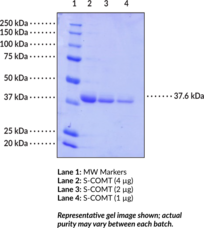
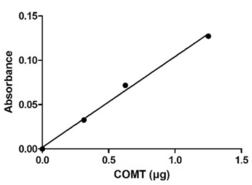
Technical Information
- S-COMT
- Pyrocatechol-O-methyltransferase
- S-Adenosyl-L-methionine:Catechol O-Methyltransferase
Shipping & Storage Information
Recommended Products
Certificates of Analysis & Batch Specific Data
Provide batch numbers separated by commas to download or request available product inserts, QC sheets, certificates of analysis, data packs, and GC-MS data.
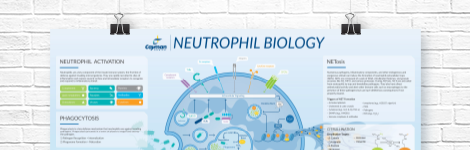
Neutrophil Biology Wall Poster
Explore how neutrophils shape the immune response in health and disease. This poster highlights neutrophil pathogen defense mechanisms, including phagocytosis, degranulation, and NETosis, as well as neutrophil roles in inflammation and NET-associated pathologies.
DOWNLOAD NOWProduct Description
S-Catechol-O-methyltransferase (S-COMT) is the soluble cytosolic form of COMT.1 A rough endoplasmic reticulum membrane-bound form of COMT (MB-COMT) is also encoded by the COMT gene but produced via a separate promoter and contains an additional 50 amino acid residues, which compose the membrane anchor region.1,2 COMT is comprised of one domain with eight α helices surrounding a central β sheet.3 It is the methyltransferase responsible for transferring a methyl group from S-adenosyl-L-methionine (SAM) to a catechol hydroxyl in the inactivation or degradation of catechol-containing molecules such as catecholamines.4 S-COMT is involved primarily in the inactivation of endogenous and xenobiotic catechols, such as catechol-containing hormones and carcinogenic flavonoids, and MB-COMT is involved primarily in the degradation of endogenous catecholamine neurotransmitters.4,5 S-COMT is the predominant form of COMT and is found primarily in the liver and kidney but is also found in the stomach, small intestine, adrenal gland, spleen, and brain.6 A valine-to-methionine substitution (Val158Met) in COMT affects its thermostability and may reduce its activity by greater than 50% in the human brain.7 The Val158Met variant of COMT is associated with Parkinson’s disease in an ethnicity-dependent manner.8 COMT interacts with severe acute respiratory coronavirus 2 (SARS-CoV-2) non-structural protein 7 (Nsp7), which, together with Nsp8, forms the primase complex of the replicase-transcriptase complex of SARS-CoV-2.9 Cayman’s S-Catechol-O-Methyltransferase (human, recombinant) protein can be used for ELISA, Western blot (WB), and enzyme activity assay applications.
WARNING This product is not for human or veterinary use.
References & Product Citations
1. Purification methods of mammalian catechol-
2. A novel prokaryotic expression system for biosynthesis of recombinant human membrane-
3. The chemistry of catechol-
4. Cloning, expression and structure of catechol-
5. Structure-
6. Distribution of catechol-
7. Genes, cognition and brain through a COMT lens. Neuroscience 164(1), 72-87 (2009).
8. COMT Val158Met polymorphism and Parkinson’s disease risk: A pooled analysis in different populations. Neurol. Res. 41(4), 319-325 (2019).
9. A SARS-
Contact Info
Cayman Chemical1180 East Ellsworth RoadAnn Arbor, Michigan 48108 USAToll Free: (800) 364-9897(USA and Canada only)Fax: (734) 971-3640


