
Technical Support & Resources
Visit our FAQ
Contact Us
Toll Free Phone (USA and Canada Only): (888) 526-5351
Direct Phone: (734) 975-3888

Technical Information
Shipping & Storage Information
Recommended Products
Certificates of Analysis & Batch Specific Data
Provide batch numbers separated by commas to download or request available product inserts, QC sheets, certificates of analysis, data packs, and GC-MS data.
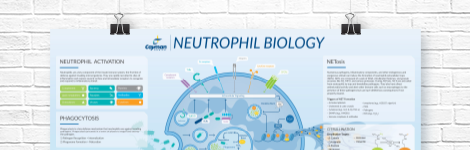
Neutrophil Biology Wall Poster
Explore how neutrophils shape the immune response in health and disease. This poster highlights neutrophil pathogen defense mechanisms, including phagocytosis, degranulation, and NETosis, as well as neutrophil roles in inflammation and NET-associated pathologies.
DOWNLOAD NOWProduct Description
Poly(ADP-ribose) polymerase 1 (PARP1) is a critical DNA repair enzyme involved in DNA single-strand break repair via the base excision repair pathway. PARP1 is triggered by DNA damage and its excessive activation has been proposed as a causative factor in many pathological conditions including ischemia and reperfusion injury, asthma-related inflammation, and atherogenesis.1,2,3 TIQ-A is a PARP1 inhibitor (IC50 = 450 nM in cultured mouse cortical neurons).1 It displays neuroprotective effects in cultured mouse cortical neurons injured by oxygen-glucose deprivation (IC50 = 0.15 µM). TIQ-A has been used to inhibit eosinophilic infiltration into airways of OVA-challenged mice and to induce the regression of atherosclerotic plaques in high-fat fed apolipoprotein E(-/-) mice.2,3
WARNING This product is not for human or veterinary use.
References & Product Citations
1. Novel isoquinolinone-
2. Poly(ADP-
3. Thieno[2,3-
Contact Info
Cayman Chemical1180 East Ellsworth RoadAnn Arbor, Michigan 48108 USAToll Free: (800) 364-9897(USA and Canada only)Fax: (734) 971-3640


