
Technical Support & Resources
Information provided in the product description is from published literature. Due to the nature of scientific experimentation, your results (e.g., selectivity and effective concentrations) or specific application for this product may differ. If you have questions about how this product fits your application, please contact our technical support staff.
Visit our FAQ
Contact Us
Toll Free Phone (USA and Canada Only): (888) 526-5351
Direct Phone: (734) 975-3888

Technical Information
- Darapram
- Daraprim®
- Khloridin
- NSC 3061
Shipping & Storage Information
Recommended Products





Certificates of Analysis & Batch Specific Data
Provide batch numbers separated by commas to download or request available product inserts, QC sheets, certificates of analysis, data packs, and GC-MS data.
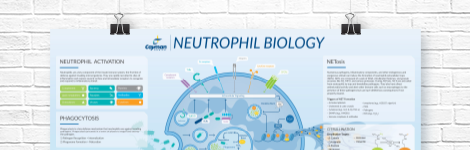
Neutrophil Biology Wall Poster
Explore how neutrophils shape the immune response in health and disease. This poster highlights neutrophil pathogen defense mechanisms, including phagocytosis, degranulation, and NETosis, as well as neutrophil roles in inflammation and NET-associated pathologies.
DOWNLOAD NOWProduct Description
Pyrimethamine is an antiprotozoal agent that is primarily active against P. falciparum, inhibiting the protozoal enzyme dihydrofolate reductase (DHFR).1 By blocking DHFR activity, pyrimethamine prevents the production of tetrahydrofolic acid, an essential coenzyme involved in DNA and RNA synthesis. In in vivo antimalarial mouse models, pyrimethamine displays a prophylactic effect at an ED50 value of 0.5 mg/kg.2 Sulphonamides act synergistically with pyrimethamine by arresting production of dihydrofolic acid, resulting in the sequential blockade of the folate pathway of protozoa.3 Pyrimethamine has also been found to limit the expression of the superoxide dismutase 1 (SOD1) gene, a metalloenzyme involved in amyotrophic lateral sclerosis.4
WARNING This product is not for human or veterinary use.
References & Product Citations
1. Chemoprophylaxis and chemotherapy. Brit. Med. J. 2, 95-98 (1971).
2. In vivo antiplasmodial potentials of the combinations of four nigerian antimalarial plants. Molecules 19(9), 13136-13146 (2014).
3. Chloroquine or amodiaquine combined with sulfadoxine-
4. Recent progress in the discovery of small molecules for the treatment of amyotrophic lateral sclerosis (ALS). Beilstein J. Org. Chem. 9, 717-732 (2013).
Contact Info
Cayman Chemical1180 East Ellsworth RoadAnn Arbor, Michigan 48108 USAToll Free: (800) 364-9897(USA and Canada only)Fax: (734) 971-3640


