An antibacterial lipopeptide
Technical Support & Resources

Information provided in the product description is from published literature. Due to the nature of scientific experimentation, your results (e.g., selectivity and effective concentrations) or specific application for this product may differ. If you have questions about how this product fits your application, please contact our technical support staff.

Visit our FAQ

Contact Us

Toll Free Phone (USA and Canada Only): (888) 526-5351
Direct Phone: (734) 975-3888

Request Technical Support

Technical Support Request

To streamline the process attach the appropriate questionnaire to your inquiry.

Download IHC QuestionnaireDownload WB Questionnaire

View Our Privacy Statement for details on how we use and protect your data. In addition, this site is protected by hCaptcha and its Privacy Policy and Terms of Service apply.

Amphomycin

Item No. 17091

Technical Information
Formal Name
2,2'-((6S,9R,15S,21S,24S,26aR,33S,34R,36aS)-9-((R)-1-aminoethyl)-33-((2S)-3-carboxy-2-((Z)-10-methyldodec-3-enamido)propanamido)-24-((S)-1-carboxyethyl)-6-isopropyl-34-methyl-5,8,11,14,17,20,23,26,32,36-decaoxotetratriacontahydro-1H,5H-pyrido[1,2-a]pyrrolo[1,2-y][1,4,7,10,13,16,19,22,25,28]decaazacyclohentriacontine-15,21-diyl)diacetic acid
CAS Number
1402-82-0
Molecular Formula
C58H91N13O20
Formula Weight
Purity
≥95%
A solid
DMF: SolubleDMSO: SolubleEthanol: SolubleMethanol: Soluble
SMILES
O=C([C@@H]1N(CCCC1)C([C@@](NC([C@@H](NC(C/C=C\CCCCCC(CC)C)=O)CC(O)=O)=O)([C@H](NC([C@@H]2CCCN2C([C@@H](NC([C@@]([H])([C@H](N)C)N3)=O)C(C)C)=O)=O)C)[H])=O)N[C@@]([C@@H](C(O)=O)C)(C(N[C@H](C(NCC(N[C@@H](CC(O)=O)C(NCC3=O)=O)=O)=O)CC(O)=O)=O)[H]
InChi Code
InChI=1S/C58H91N13O20/c1-8-30(4)18-13-11-9-10-12-14-21-39(72)63-36(26-44(79)80)51(83)69-48-33(7)62-52(84)38-20-17-23-71(38)56(88)45(29(2)3)67-55(87)47(32(6)59)66-41(74)28-61-49(81)34(24-42(75)76)64-40(73)27-60-50(82)35(25-43(77)78)65-54(86)46(31(5)58
InChi Key
WAFOSUDOWLQGBG-NUZIGYSUSA-N
Shipping & Storage Information
Storage
-20°C
Shipping
Room temperature in continental US; may vary elsewhere
Recommended Products

Certificates of Analysis & Batch Specific Data

Provide batch numbers separated by commas to download or request available product inserts, QC sheets, certificates of analysis, data packs, and GC-MS data.
    Add

    Add

    Cayman Chemical
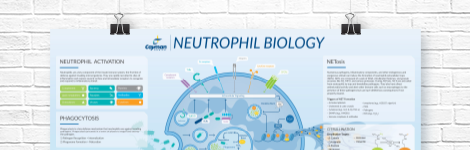
    Neutrophil Biology Wall Poster

    Explore how neutrophils shape the immune response in health and disease. This poster highlights neutrophil pathogen defense mechanisms, including phagocytosis, degranulation, and NETosis, as well as neutrophil roles in inflammation and NET-associated pathologies.

    DOWNLOAD NOW
    Product Description

    Amphomycin is a natural antibacterial lipopeptide first isolated from S. canus. Lipopeptides are cyclic depsipeptides with a peptidyl side chain capped with a saturated alkyl tail.1 They preferentially target Gram-positive bacteria and may be useful against drug resistant strains.1 Amphomycin is also an inhibitor of peptidoglycan synthesis in both bacterial and mammalian systems, as it binds with phosphorylated substrates in a calcium-dependent manner.2,3,4,5

    WARNING This product is not for human or veterinary use.

    References & Product Citations
    Product Description References

    1. Fair, R.J., and Tor, Y. Antibiotics and bacterial resistance in the 21st century. Perspect. Medicin. Chem. 6, 25-64 (2014).

    2. Spencer, J.P., and Elbein, A.D. Transfer of mannose from GDP-mannose to lipid-linked oligosaccharide by soluble mannosyl transferase. Proc. Natl. Acad. Sci. USA 77(5), 2524-2527 (1980).

    3. Kang, M.S., Spencer, J.P., and Elbein, A.D. Amphomycin inhibition of mannose and GlcNAc incorporation into lipid-linked saccharides. The Journal of Biological Chemisty 253(24), 8860-8866 (1978).

    4. Banerjee, D.K. Amphomycin inhibits mannosylphosphoryldolichol synthesis by forming a complex with dolichylmonophosphate. The Journal of Biological Chemisty 264(4), 2024-2028 (1989).

    5. Cooper, H.N., Gurcha, S.S., Nigou, J., et alCharacterization of mycobacterial protein glycosyltransferase activity using synthetic peptide acceptors in a cell-free assay. Glycobiology 12(7), 427-434 (2002).