
Technical Support & Resources
Information provided in the product description is from published literature. Due to the nature of scientific experimentation, your results (e.g., selectivity and effective concentrations) or specific application for this product may differ. If you have questions about how this product fits your application, please contact our technical support staff.
Visit our FAQ
Contact Us
Toll Free Phone (USA and Canada Only): (888) 526-5351
Direct Phone: (734) 975-3888
Technical Information
- BAY 58-2667
Shipping & Storage Information
Recommended Products
Certificates of Analysis & Batch Specific Data
Provide batch numbers separated by commas to download or request available product inserts, QC sheets, certificates of analysis, data packs, and GC-MS data.
Product Description
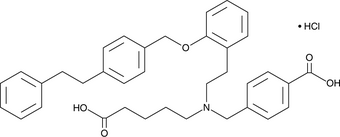
Soluble guanylate cyclase (sGC) is the primary cellular receptor for NO. NO binds and activates a heme group in sGC, initiating the conversion of GTP to the second messenger cGMP. cGMP subsequently mediates a number of signaling cascades leading to vasorelaxation and inhibiting smooth muscle proliferation, leukocyte recruitment, and platelet aggregation. Oxidation of the heme results in its dissociation from sGC and an impairment of NO signaling, which has been linked to hypertension, hyperlidemia, cardiovascular disease, and diabetes.1 Cinaciguat is an activator of sGC that binds to a regulatory site, resulting in activation in an NO-independent manner (Kd = 3.2 nM).2 It activates the enzyme even if it has been oxidized or rendered heme deficient.2 In animals, cinaciguat has been shown to reduce hypertension, limit cardiomyocyte hypertrophy, protect against ischemia/reperfusion injury, and reduce morbidity and mortality in response to endotoxic shock.2,3,4,5
WARNING This product is not for human or veterinary use.
References & Product Citations
1. Soluble guanylate cyclase as an emerging therapeutic target in cardiopulmonary disease. Circulation 123(20), 2263-2273 (2011).
2. NO-
3. The soluble guanylyl cyclase activator bay 58-
4. Cinaciguat, a novel activator of soluble guanylate cyclase, protects against ischemia/reperfusion injury: role of hydrogen sulfide. Am. J. Physiol. Heart Circ. Physiol. 302(6), H1347-H1354 (2012).
5. The soluble guanylate cyclase activator BAY 58-
Contact Info
Cayman Chemical1180 East Ellsworth RoadAnn Arbor, Michigan 48108 USAToll Free: (800) 364-9897(USA and Canada only)Fax: (734) 971-3640


