
Technical Support & Resources
Information provided in the product description is from published literature. Due to the nature of scientific experimentation, your results (e.g., selectivity and effective concentrations) or specific application for this product may differ. If you have questions about how this product fits your application, please contact our technical support staff.
Visit our FAQ
Contact Us
Toll Free Phone (USA and Canada Only): (888) 526-5351
Direct Phone: (734) 975-3888
Product Categories

Technical Information
- (-)-BCH 189
- 3TC
- 2’,3’-dideoxy-3’-Thiacytidine
Shipping & Storage Information
Recommended Products





Certificates of Analysis & Batch Specific Data
Provide batch numbers separated by commas to download or request available product inserts, QC sheets, certificates of analysis, data packs, and GC-MS data.
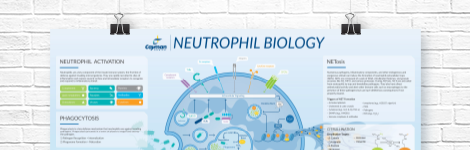
Neutrophil Biology Wall Poster
Explore how neutrophils shape the immune response in health and disease. This poster highlights neutrophil pathogen defense mechanisms, including phagocytosis, degranulation, and NETosis, as well as neutrophil roles in inflammation and NET-associated pathologies.
DOWNLOAD NOWProduct Description
Lamivudine is a nucleoside reverse transcriptase inhibitor (NRTI).1 It is phosphorylated intracellularly to its active form lamivudine-5'-triphosphate by the successive actions of deoxycytidine kinase, cytidine monophosphate kinase, and deoxycytidine monophosphate kinase. It reduces HIV-1 p24 antigen levels in the culture supernatant of human peripheral blood lymphocytes infected with laboratory-adapted HIV-1 strains, indicating inhibition of HIV replication, with IC50 values ranging from 0.0025 to 0.09 µM.2 Lamivudine inhibits syncytium formation between various CD4+ cell lines and several strains of HIV-1 or HIV-2 (IC50s = 0.014-0.61 µM). It reduces serum viral titers in a woodchuck model of chronic hepatitis B virus (HBV) infection when administered at doses of 40 or 200 mg/kg.3 Formulations containing lamivudine have been used in the treatment of HIV and HBV infections.
WARNING This product is not for human or veterinary use.
References & Product Citations
1. Clinical pharmacokinetics of lamivudine. Clin. Pharmacokinet. 36(1), 41-66 (1999).
2. (–)-
3. Lamivudine therapy of WHV-
Contact Info
Cayman Chemical1180 East Ellsworth RoadAnn Arbor, Michigan 48108 USAToll Free: (800) 364-9897(USA and Canada only)Fax: (734) 971-3640


