
Technical Support & Resources
Visit our FAQ
Contact Us
Toll Free Phone (USA and Canada Only): (888) 526-5351
Direct Phone: (734) 975-3888
Product Categories
Product Type
Technical Information
- Choleragen
- CT
Shipping & Storage Information
Recommended Products
Certificates of Analysis & Batch Specific Data
Provide batch numbers separated by commas to download or request available product inserts, QC sheets, certificates of analysis, data packs, and GC-MS data.
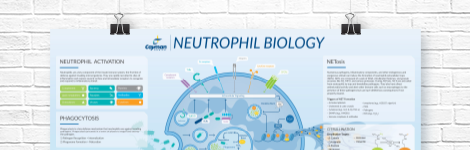
Neutrophil Biology Wall Poster
Explore how neutrophils shape the immune response in health and disease. This poster highlights neutrophil pathogen defense mechanisms, including phagocytosis, degranulation, and NETosis, as well as neutrophil roles in inflammation and NET-associated pathologies.
DOWNLOAD NOWProduct Description
Cholera toxin is produced by V. cholerae and is a multimeric enterotoxin that consists of a single A subunit surrounded by five B subunits.1 Following binding to the membrane of enteric cells, the toxin is endocytosed and travels to the endoplasmic reticulum where the enzymatically active A subunit (CTA1) is translocated to the cytosol. Within the cytosol, CTA1 catalyzes the ADP-ribosylation of the Gsα protein, which activates adenylate cyclase, locking it in an ‘on’ position.2 The increased intracellular concentration of cAMP causes hypersecretion of chloride and bicarbonate ions, which results in increased fluid secretion and severe diarrhea characteristic of the disease cholera.1
WARNING This product is not for human or veterinary use.
References & Product Citations
1. Insights on the trafficking and retro-
2. Short communications. Subunit A from cholera toxin is an activator of adenylate cyclase in pigeon erythrocytes. Biochem J. 146(1), 269-271 (1975).
Contact Info
Cayman Chemical1180 East Ellsworth RoadAnn Arbor, Michigan 48108 USAToll Free: (800) 364-9897(USA and Canada only)Fax: (734) 971-3640


