
Technical Support & Resources
Visit our FAQ
Contact Us
Toll Free Phone (USA and Canada Only): (888) 526-5351
Direct Phone: (734) 975-3888
Product Categories
Technical Information
- ENO1
- Enolase-1
- MBP-1
- MPB-1
- NNE
- Non-Neural Enolase
- Phosphopyruvate Hydratase
- Plasminogen-Binding Protein
Shipping & Storage Information
Recommended Products
Certificates of Analysis & Batch Specific Data
Provide batch numbers separated by commas to download or request available product inserts, QC sheets, certificates of analysis, data packs, and GC-MS data.

Visit Our Cancer Resource Center
Find Tools & Resources to Study the Hallmarks of Cancer
- Cancer cell signaling & regulation
- Cancer metabolism
- Tumor microenvironment
Product Description
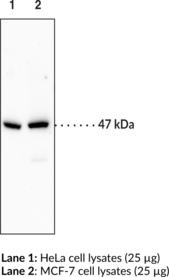
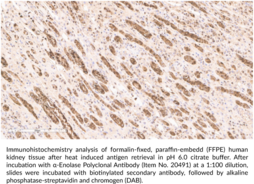
α-Enolase, also known as enolase 1, is a glycolytic enzyme that catalyzes the conversion of 2-phosphoglycerate to phosphoenolpyruvate.1 It is ubiquitously expressed in human tissues, including liver, spleen, kidney, and brain. In cells, α-enolase is primarily localized to the cytoplasm, however, an alternatively translated form localizes to the nucleus and lacks glycolytic enzyme activity.1,2 α-Enolase also functions as a cell surface receptor for plasminogen on pathogens and activated immune cells, as an oxidative stress protein in endothelial cells, and as a chromatin binding partner to facilitate transcription.2,3,4 The ENO1 promoter contains a hypoxia-response element, allowing α-enolase to facilitate aerobic glycolysis and contribute to the Warburg effect in tumor cells.2 α-Enolase is overexpressed in multiple tumors, including glioma, neuroblastoma, pancreatic, prostate, and hepatocellular carcinomas. Its role as a plasminogen receptor facilitates extracellular matrix degradation and cancer invasion.4 α-Enolase is an autoantigen in asthma, Hashimoto's encephalopathy, and rheumatoid arthritis, and has been found in the serum of pediatric patients with juvenile idiopathic arthritis.5,6,7,8 Cayman's α-Enolase Polyclonal Antibody can be used for Western blot and ELISA applications. The antibody recognizes α-enolase at ~47 kDa from human samples.
WARNING This product is not for human or veterinary use.
References & Product Citations
1. ENO1 promotes tumor proliferation and cell adhesion mediated drug resistance (CAM-
2. Alpha-
3. Structural analysis of α-
4. Surface α-
5. Identification of α-
6. Measurement and evaluation of isotypes of anti-
7. High prevalence of serum autoantibodies against the amino terminal of α-
8. Timosaponin AIII induces antiplatelet and antithrombotic activity via Gq-
Contact Info
Cayman Chemical1180 East Ellsworth RoadAnn Arbor, Michigan 48108 USAToll Free: (800) 364-9897(USA and Canada only)Fax: (734) 971-3640


