
Technical Support & Resources
Visit our FAQ
Contact Us
Toll Free Phone (USA and Canada Only): (888) 526-5351
Direct Phone: (734) 975-3888
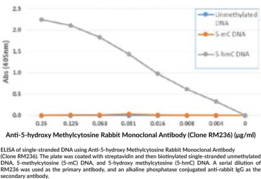
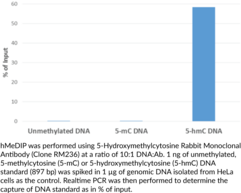
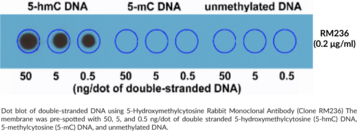
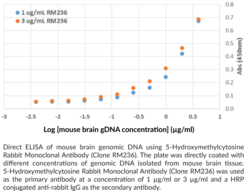
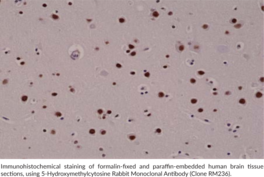
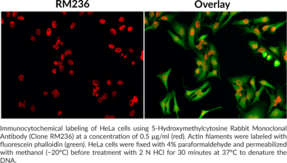
Technical Information
- 5-hmC
Shipping & Storage Information
Recommended Products
Certificates of Analysis & Batch Specific Data
Provide batch numbers separated by commas to download or request available product inserts, QC sheets, certificates of analysis, data packs, and GC-MS data.

Visit Our Cancer Resource Center
Find Tools & Resources to Study the Hallmarks of Cancer
- Cancer cell signaling & regulation
- Cancer metabolism
- Tumor microenvironment
Product Description
5-Hydroxymethylcytosine (5-hmC) is an epigenetic modification formed from the oxidation of 5-methylcytosine by Tet dioxygenases.1 5-hmC is primarily a stable DNA modification, but it can be oxidized by Tet enzymes and its products further modified to generate nonmethylated cytosine, indicating a role as an intermediate in DNA demethylation as well.2,3,4 It is associated with actively transcribed genes and recognized by a variety of proteins, including proteins involved in DNA repair and DNA metabolic processes.2,4 5-hmC has been found in all mammalian tissues but levels are higher in the brain relative to other tissues.5 The percentage of genomic 5-hmC in mouse cerebellum increases during postnatal development until adulthood, and genes acquiring intragenic 5-hmC are enriched in pathways associated with age-related neurodegenerative disease pathways in adult mice.6 In contrast, 5-hmC levels are reduced by up to 8-fold in cancer tissues.2,7 Cayman’s 5-Hydroxymethylcytosine Rabbit Monoclonal Antibody (Clone RM236) can be used for dot blot, ELISA, hydroxymethylated DNA immunoprecipitation (hMeDIP), immunocytochemistry (ICC), and immunohistochemistry (IHC) applications.
WARNING This product is not for human or veterinary use.
References & Product Citations
1. Conversion of 5-
2. 5-
3. Epigenetic regulatory functions of DNA modifications: 5-
4. Dynamic readers for 5-
5. Tissue distribution of 5-
6. Selective chemical labeling reveals the genome-
7. Epigenomic analysis of 5-
Contact Info
Cayman Chemical1180 East Ellsworth RoadAnn Arbor, Michigan 48108 USAToll Free: (800) 364-9897(USA and Canada only)Fax: (734) 971-3640


