
Technical Support & Resources
Visit our FAQ
Contact Us
Toll Free Phone (USA and Canada Only): (888) 526-5351
Direct Phone: (734) 975-3888
Product Categories
MHC Class I Monoclonal Antibody (Clone W6/32)
Item No. 20898
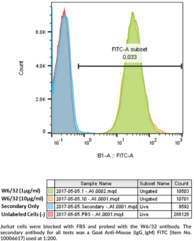
Technical Information
- HLA-A
- HLA-B
- HLA-C
- Major Histocompatibility Complex Class I
Shipping & Storage Information
Recommended Products
Certificates of Analysis & Batch Specific Data
Provide batch numbers separated by commas to download or request available product inserts, QC sheets, certificates of analysis, data packs, and GC-MS data.
Neutrophil Biology Wall Poster
Explore how neutrophils shape the immune response in health and disease. This poster highlights neutrophil pathogen defense mechanisms, including phagocytosis, degranulation, and NETosis, as well as neutrophil roles in inflammation and NET-associated pathologies.
DOWNLOAD NOWProduct Description
Major histocompatibility complex (MHC) molecules, also designated human leukocyte antigen (HLA) molecules, are cell-surface receptors that bind foreign peptides and present them to T lymphocytes.1 MHC class I molecules consist of two polypeptide chains, an α or heavy chain, and β2-microglobulin, a non-covalently associated protein.2 Cytotoxic T lymphocytes bind antigenic peptides presented by MHC class I molecules.3 Antigens that bind to MHC class I molecules are typically 8-10 residues in length and are stabilized in a peptide binding groove.4 HLA-class I MHC antigens are intrinsic membrane glycoproteins expressed on nucleated cells and non-covalently associated with an invariant β2-microglobulin. They carry foreign determinants important for immune recognition by cytotoxic T cells and are thus important for antiviral and antitumor defense. 3 Human HLA-class I antigens are represented by HLA-A, HLA-B, and HLA-C molecules
WARNING This product is not for human or veterinary use.
References & Product Citations
1. Production of monoclonal antibodies to group A erythrocytes, HLA and other human cell surface antigens-
2. Antigen recognition by B-
3. Use of "one-
4. Monomorphic anti-
Identification of molecularly targeted therapy-
Contact Info
Cayman Chemical1180 East Ellsworth RoadAnn Arbor, Michigan 48108 USAToll Free: (800) 364-9897(USA and Canada only)Fax: (734) 971-3640


