
Technical Support & Resources
Visit our FAQ
Contact Us
Toll Free Phone (USA and Canada Only): (888) 526-5351
Direct Phone: (734) 975-3888
Product Categories

Technical Information
- pan-Carbamylation
Shipping & Storage Information
Recommended Products
Certificates of Analysis & Batch Specific Data
Provide batch numbers separated by commas to download or request available product inserts, QC sheets, certificates of analysis, data packs, and GC-MS data.
Product Description
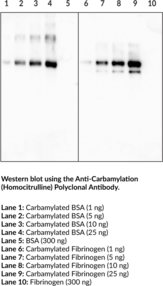
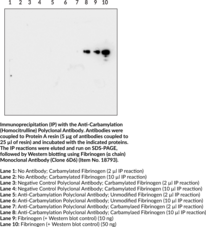
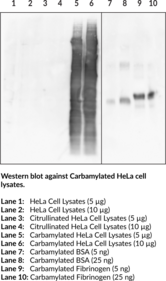
Carbamylation is a non-enzymatic and irreversible post-translational protein modification whereby cyanate/isocyanic acid adds a carbamoyl group to the ε-amino of lysine side chains, converting lysine to the non-standard amino acid homocitrulline.1,2 Cyanate is formed primarily from the breakdown of urea but can also be formed from the oxidation of thiocyanate by myeloperoxidase in the presence of hydrogen peroxide at sites of inflammation, such as atherosclerotic tissues.1,2,3 LDL can be carbamylated and has atherogenic properties, disrupting LDL receptor binding and increasing vascular smooth muscle cell proliferation and endothelial cell death.4,3 Protein carbamylation and carbamylated LDL levels are increased in the plasma of patients with disorders resulting in high levels of urea, such as chronic and end-stage renal diseases.2,4 Furthermore, the levels of plasma protein-bound homocitrulline positively correlate with the frequency of, and mortality from, major adverse cardiac events and predict cardiovascular disease risk.3 Carbamylated proteins can also induce an immune response leading to the production of anti-homocitrulline autoantibodies, which have been found at higher levels in individuals with rheumatoid arthritis and are positively associated with the degree of joint damage.5 Cayman’s Anti-Carbamylation (Homocitrulline) Polyclonal Antibody can be used for ELISA, immunoprecipitation (IP), and Western blot (WB) applications. The antibody recognizes carbamylated proteins and does not detect citrullinated proteins.
WARNING This product is not for human or veterinary use.
References & Product Citations
1. Reactions of cyanate present in aqueous urea with amino acids and proteins. The Journal of Biological Chemisty 235(11), 3177-3181 (1960).
2. Protein carbamylation in chronic kidney disease and dialysis. Adv. Clin. Chem. 87, 37-67 (2018).
3. Protein carbamylation links inflammation, smoking, uremia and atherogenesis. Nat. Med. 13(1), 1176-1184 (2007).
4. Carbamylated low-
5. Autoantibodies recognizing carbamylated proteins are present in sera of patients with rheumatoid arthritis and predict joint damage. Proc. Natl. Acad. Sci. USA 108(42), 17372-17377 (2011).
Contact Info
Cayman Chemical1180 East Ellsworth RoadAnn Arbor, Michigan 48108 USAToll Free: (800) 364-9897(USA and Canada only)Fax: (734) 971-3640


