
Technical Support & Resources
Visit our FAQ
Contact Us
Toll Free Phone (USA and Canada Only): (888) 526-5351
Direct Phone: (734) 975-3888
Product Categories
Product Type
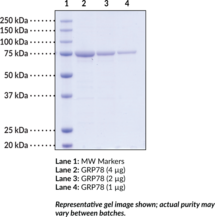
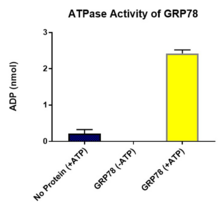
Technical Information
- BiP
- Glucose-Regulated Protein 78
- HspA5
Shipping & Storage Information
Recommended Products
Certificates of Analysis & Batch Specific Data
Provide batch numbers separated by commas to download or request available product inserts, QC sheets, certificates of analysis, data packs, and GC-MS data.
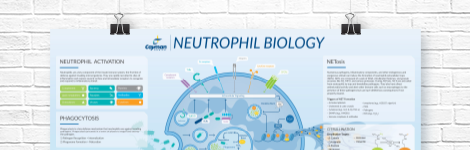
Neutrophil Biology Wall Poster
Explore how neutrophils shape the immune response in health and disease. This poster highlights neutrophil pathogen defense mechanisms, including phagocytosis, degranulation, and NETosis, as well as neutrophil roles in inflammation and NET-associated pathologies.
DOWNLOAD NOWProduct Description
Glucose-regulated protein 78 kDa (GRP78), also known as heat shock 70 kDa protein 5 (HspA5) and immunoglobulin heavy chain-binding protein (BiP), is a glucose-regulated protein that is constitutively expressed in the lumen of the endoplasmic reticulum (ER).1,2,3 It is composed of two functional domains, an N-terminal nucleotide-binding domain that contains an ATP catalytic site and a C-terminal substrate binding domain that binds hydrophobic polypeptides.4 GRP78 functions as a molecular chaperone, assisting in the translocation of polypeptides from the cytosol into the ER, folding of nascent polypeptides, as well as refolding and preventing aggregation of misfolded proteins. It also plays a role in the ER-assisted degradation (ERAD) and unfolded protein response (UPR) pathways.5,6 GRP78 chaperone activity is driven by an ATPase cycle that is regulated by ER-localized DnaJ-like protein co-factors and nuclear exchange factors.7,8 Expression of GRP78 is upregulated in response to ER stress caused by viral and bacterial infections as well as various cancers.9 ER stress can also promote extracellular secretion of GRP78 leading to its anti-inflammatory functions in immunity.10
WARNING This product is not for human or veterinary use.
References & Product Citations
1. Loss of BiP/GRP78 function blocks translocation of secretory proteins in yeast. J. Cell. Biol. 110(6), 1885-1895 (1990).
2. BiP/Kar2p serves as a molecular chaperone during carboxypeptidase Y folding in yeast. J. Cell. Biol. 130(1), 41-49 (1995).
3. Hsp70 chaperones: Cellular functions and molecular mechanism. Cell Mol. Life Sci. 62(6), 670-684 (2005).
4. Close and allosteric opening of the polypeptide-
5. Mutant analysis links the translocon and BiP to retrograde protein transport for ER degradation. Nature 388(6645), 891-895 (1997).
6. Dissociation of Kar2p/BiP from an ER sensory molecule, Ire1p, triggers the unfolded protein response in yeast. Biochem. Biophys. Res. Commun. 279(2), 445-450 (2000).
7. The ATP hydrolysis-
8. BiP and its nucleotide exchange factors Grp170 and Sil1: Mechanisms of action and biological functions. J. Mol. Biol. 42(7), 1589-1608 (2015).
9. GRP78/BiP/HSPA5/Dna K is a universal therapeutic target for human disease. J. Cell. Physiol. 230(7), 1661-1676 (2015).
10. Resolution-
Contact Info
Cayman Chemical1180 East Ellsworth RoadAnn Arbor, Michigan 48108 USAToll Free: (800) 364-9897(USA and Canada only)Fax: (734) 971-3640


