
Technical Support & Resources
Visit our FAQ
Contact Us
Toll Free Phone (USA and Canada Only): (888) 526-5351
Direct Phone: (734) 975-3888
Technical Information
- Heat Shock Cognate 70
Shipping & Storage Information
Recommended Products
Certificates of Analysis & Batch Specific Data
Provide batch numbers separated by commas to download or request available product inserts, QC sheets, certificates of analysis, data packs, and GC-MS data.
Product Description
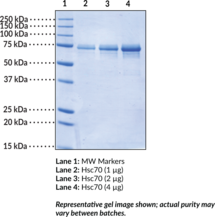
Hsc70 is a chaperone from the Hsp70 chaperone family encoded by the HspA8 gene that shares 85% sequence identity to Hsp70 (encoded by HspA1A gene), and is one of the constitutively expressed members from this family.1 Hsc70 acts as the main housekeeping protein but is also involved in many functions such as ubiquitin-proteasome degradation pathway and transporting cytoplasmic proteins into the nucleus.2,3 Hsc70 also garnered interests as a potential therapeutic target since promoting accumulation of unfolded proteins can serve as a potential strategy to cause tumor death.4
WARNING This product is not for human or veterinary use.
References & Product Citations
1. HSPA8/HSC70 chaperone protein: Structure, function, and chemical targeting. Autophagy 9(12), 1937-1954 (2013).
2. Ubiquitin-
3. Nuclear and nucleolar targeting sequences of c-
4. A small molecule inhibitor of inducible heat shock protein 70. Mol. Cell 36(1), 15-27 (2009).
Contact Info
Cayman Chemical1180 East Ellsworth RoadAnn Arbor, Michigan 48108 USAToll Free: (800) 364-9897(USA and Canada only)Fax: (734) 971-3640


