
Technical Support & Resources
Information provided in the product description is from published literature. Due to the nature of scientific experimentation, your results (e.g., selectivity and effective concentrations) or specific application for this product may differ. If you have questions about how this product fits your application, please contact our technical support staff.
Visit our FAQ
Contact Us
Toll Free Phone (USA and Canada Only): (888) 526-5351
Direct Phone: (734) 975-3888

Technical Information
- SQ 18,566
Shipping & Storage Information
Recommended Products
Certificates of Analysis & Batch Specific Data
Provide batch numbers separated by commas to download or request available product inserts, QC sheets, certificates of analysis, data packs, and GC-MS data.
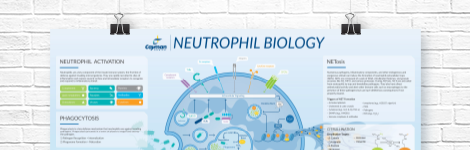
Neutrophil Biology Wall Poster
Explore how neutrophils shape the immune response in health and disease. This poster highlights neutrophil pathogen defense mechanisms, including phagocytosis, degranulation, and NETosis, as well as neutrophil roles in inflammation and NET-associated pathologies.
DOWNLOAD NOWProduct Description
Halcinonide is a synthetic glucocorticoid with anti-inflammatory properties.1,2 In a rabbit model of edema, topical application of halcinonide (0.1% w/w) decreases edema by 55% in a reversed passive Arthus skin test (RPA).1 Halcinonide (0.1% w/w) inhibits croton oil-induced ear edema by 70.1% and homologous passive cutaneous anaphylaxis (PCA) by 88.0% in rats dosed three hours prior to induction of inflammation.2 Application of halcinonide (0.1% w/w) to the abraded surface of cecum in rats inhibits leukocyte adhesion (43.3% incidence versus 100% for controls) and lowers the total number of intraperitoneal leukocytes from 270 million to 121 million 3 days post surgery.3 It also acts as an agonist at the smoothened (Smo) receptor with an EC50 value of 1,100 nM.4 Formulations containing halcinonide have been used to treat inflammatory and corticosteroid-responsive dermatoses.
WARNING This product is not for human or veterinary use.
References & Product Citations
1. Evaluation of topical anti-
2. Two simple methods for the evaluation of topically active anti-
3. Tropical application of halcinonide cream reduces the severity and incidence of intraperitoneal adhesions in a rat model. Am. J. Surg. 184(1), 74-77 (2002).
4. Identification of select glucocorticoids as smoothened agonists: Potential utility for regenerative medicine. Proc. Natl. Acad. Sci. USA 107(20), 9323-9328 (2010).
Contact Info
Cayman Chemical1180 East Ellsworth RoadAnn Arbor, Michigan 48108 USAToll Free: (800) 364-9897(USA and Canada only)Fax: (734) 971-3640


