
Technical Support & Resources
Information provided in the product description is from published literature. Due to the nature of scientific experimentation, your results (e.g., selectivity and effective concentrations) or specific application for this product may differ. If you have questions about how this product fits your application, please contact our technical support staff.
Visit our FAQ
Contact Us
Toll Free Phone (USA and Canada Only): (888) 526-5351
Direct Phone: (734) 975-3888
Product Categories

Technical Information
- LY 333328
Shipping & Storage Information
Recommended Products
Certificates of Analysis & Batch Specific Data
Provide batch numbers separated by commas to download or request available product inserts, QC sheets, certificates of analysis, data packs, and GC-MS data.
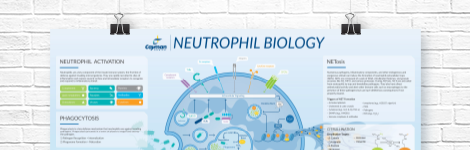
Neutrophil Biology Wall Poster
Explore how neutrophils shape the immune response in health and disease. This poster highlights neutrophil pathogen defense mechanisms, including phagocytosis, degranulation, and NETosis, as well as neutrophil roles in inflammation and NET-associated pathologies.
DOWNLOAD NOWProduct Description
Oritavancin is a semisynthetic glycopeptide antibiotic that inhibits the growth of Gram-positive bacteria.1 It inhibits transglycosylation and transpeptidation in the bacterial cell wall to disrupt membrane integrity.2,3 Oritavancin inhibits the growth of clinical isolates from skin and soft-tissue infections, including methicillin-resistant and -susceptible S. aureus (MRSA, MSSA), vancomycin-resistant and -susceptible E. faecium (VREF, VSRF), as well as other staphylococci, streptococci, and enterococci (MIC90s = ≤0.008-0.5 mg/L).4 Oritavancin inhibits growth of S. aureus in a neutropenic-mouse thigh model of infection (ED50 = 0.95 mg/kg for a single dose).5 It improves survival in a mouse inhalation model of B. anthracis Ames anthrax when administered prophylactically pre- and postexposure and when administered post symptom development.6 Formulations containing oritavancin have been used to treat bacterial skin infections.
WARNING This product is not for human or veterinary use.
References & Product Citations
1. In vitro activity and spectrum of LY333328, a novel glycopeptide derivative. Antimicrob. Agents Chemother. 41(2), (1997).
2. Oritavancin: Mechanism of action. Clin. Infect. Dis. 54(Suppl 3), S214-S219 (2012).
3. Oritavancin disrupts membrane integrity of Staphylococcus aureus and vancomycin-
4. Activity of oritavancin against Gram-
5. Pharmacodynamics of oritavancin (LY333328) in a neutropenic-
6. Efficacy of oritavancin in a murine model of Bacillus anthracis spore inhalation anthrax. Antimicrob. Agents Chemother. 52(9), 3350-3357 (2008).
Contact Info
Cayman Chemical1180 East Ellsworth RoadAnn Arbor, Michigan 48108 USAToll Free: (800) 364-9897(USA and Canada only)Fax: (734) 971-3640


