
Technical Support & Resources
Visit our FAQ
Contact Us
Toll Free Phone (USA and Canada Only): (888) 526-5351
Direct Phone: (734) 975-3888
Product Categories
Research Area
Technical Information
- Heat Shock 70 kDa Protein 1A
- Heat Shock Protein 70
- HSP70-1
Shipping & Storage Information
Recommended Products
Certificates of Analysis & Batch Specific Data
Provide batch numbers separated by commas to download or request available product inserts, QC sheets, certificates of analysis, data packs, and GC-MS data.
Product Description
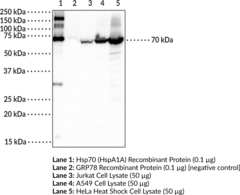
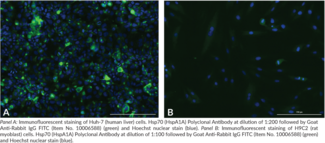
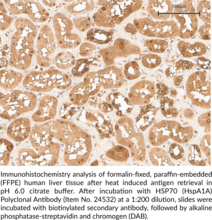
Heat shock protein 70s (Hsp70s) are abundant and stress-inducible 70 kDa molecular chaperone proteins encoded by a highly conserved, multigene family.1 They are monomeric proteins that can be divided into two functional domains: an N-terminal ATPase domain and a substrate binding domain that contains a highly conserved EEVD motif at its C-terminus. Hsp70s are found in the cytosol, nuclei, endoplasmic reticulum, mitochondria, and chloroplasts of eukaryotes, as well as in bacteria. They function as molecular chaperones that assist in a wide range of cellular processes, including refolding of aggregated or misfolded proteins, co- and post-translational folding and assembly of nascent peptides, membrane translocation of secretory and organellar proteins, controlling activity of regulatory nuclear receptors, kinases and transcription factors, as well as cooperativity with the Hsp90 chaperone system in eukaryotes.2 The Hsp70 chaperone cycle is ATP-dependent and initiated by transient interaction of the Hsp70 substrate binding domain with hydrophobic regions within a peptide or protein. It consists of an alteration between the low-affinity ATP-bound state with fast rates of substrate exchange and the high-affinity ADP bound state with slow rates of substrate exchange. Hsp70s are subject to a variety of post-translational modifications and their expression is upregulated under conditions of cellular stress and in a variety of disease states. Cayman’s Hsp70 (HspA1A) Polyclonal Antibody can be used for ELISA, Immunofluorescence, Immunohistochemistry, and Western blot applications. The antibody recognizes Hsp70, also known as HspA1A, at ~70 kDa from human samples.
WARNING This product is not for human or veterinary use.
References & Product Citations
1. Molecular evolution of the HSP70 multigene family. J. Mol. Evol. 38(1), 1-17 (1994).
2. Hsp70 chaperones: Cellular functions and molecular mechanism. Cell Mol. Life Sci. 62(6), 670-684 (2005).
Contact Info
Cayman Chemical1180 East Ellsworth RoadAnn Arbor, Michigan 48108 USAToll Free: (800) 364-9897(USA and Canada only)Fax: (734) 971-3640


