
Technical Support & Resources
Visit our FAQ
Contact Us
Toll Free Phone (USA and Canada Only): (888) 526-5351
Direct Phone: (734) 975-3888
Product Categories
Product Type
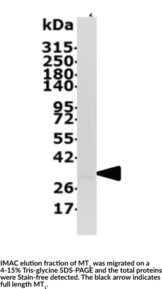
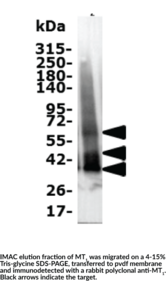
Technical Information
- MT1
Shipping & Storage Information
Recommended Products
Certificates of Analysis & Batch Specific Data
Provide batch numbers separated by commas to download or request available product inserts, QC sheets, certificates of analysis, data packs, and GC-MS data.
Product Description
Melatonin receptor type 1A (MT1) (human recombinant) contains amino acids corresponding to the full length, wild-type human MT1 receptor, as well as N-terminal histidine and streptavidin tags with a TEV protease cleavage site. The MT1 receptor is encoded by the MTNR1A gene and is a G protein-coupled receptor expressed on post-synaptic terminals in the suprachiasmic nucleus (SCN) and hypothalamus.1 It is activated by melatonin and signals through Gi and Gq proteins. Based on MT1 and MT2 receptor knockout mouse studies, the MT1 receptor is involved in decreasing neuronal firing in the SCN and inhibits prolactin secretion in the pituitary gland. MT1 receptor activation inhibits proliferation of hormone-refractory 22Rv1 prostate cancer cells in vitro.2 Polymorphisms in the MTNR1A gene are associated with a higher risk of oral cancer and hepatocellular carcinoma and of developing distant metastases3,4
WARNING This product is not for human or veterinary use.
References & Product Citations
1. Molecular pharmacology, regulation and function of mammalian melatonin receptors. Front. Biosci. 8, d1093-d1108 (2003).
2. Signaling mechanisms of melatonin in antiproliferation of hormone-
3. Interactions between environmental factors and melatonin receptor type 1A polymorphism in relation to oral cancer susceptibility and clinicopathologic development. PLoS One 10(3), e0121677 (2015).
4. Association of melatonin membrane receptor 1A/1B gene polymorphisms with the occurrence and metastasis of hepatocellular carcinoma. Oncotarget 8(49), 85655-85669 (2017).
Contact Info
Cayman Chemical1180 East Ellsworth RoadAnn Arbor, Michigan 48108 USAToll Free: (800) 364-9897(USA and Canada only)Fax: (734) 971-3640


