
Technical Support & Resources
Information provided in the product description is from published literature. Due to the nature of scientific experimentation, your results (e.g., selectivity and effective concentrations) or specific application for this product may differ. If you have questions about how this product fits your application, please contact our technical support staff.
Visit our FAQ
Contact Us
Toll Free Phone (USA and Canada Only): (888) 526-5351
Direct Phone: (734) 975-3888
Product Categories

Technical Information
- NSC 115918
- Quercetin 3-β-D-glucoside
- Quercetin 3-O-glucoside
Shipping & Storage Information
Recommended Products
Certificates of Analysis & Batch Specific Data
Provide batch numbers separated by commas to download or request available product inserts, QC sheets, certificates of analysis, data packs, and GC-MS data.
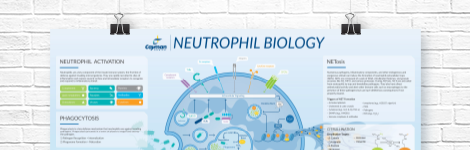
Neutrophil Biology Wall Poster
Explore how neutrophils shape the immune response in health and disease. This poster highlights neutrophil pathogen defense mechanisms, including phagocytosis, degranulation, and NETosis, as well as neutrophil roles in inflammation and NET-associated pathologies.
DOWNLOAD NOWProduct Description
Isoquercetin is a flavonoid that has been isolated from A. venetum and has diverse biological activities, including antiviral, anti-apoptotic, and neuroprotective properties.1,2,3 It reduces viral titers of H5N1 influenza isolates by 79.66% in a plaque assay when used at a concentration of 1 ng/ml.1 It inhibits apoptosis, increases cell viability, and decreases the level of reactive oxygen species (ROS) in an oxygen-glucose deprivation/reoxygenation assay when used at concentrations of 25, 50, and 100 µg/ml in primary rat hippocampal neurons and decreases TNF-α-induced cell death in primary mouse hepatocytes (IC50 = 37.5 µM).2,3 Isoquercetin (50 mg/kg) is neuroprotective in a rat model of middle cerebral artery occlusion (MCAO), reducing infarct volume and neurological symptoms, as well as increasing hippocampal expression of Nrf2 and phosphorylation of ERK1/2.2
WARNING This product is not for human or veterinary use.
References & Product Citations
1. Anti-
2. Isoquercetin activates the ERK1/2-
3. Hepatoprotective effect of Apocynum venetum and its active constituents. Planta Med. 66(2), 127-133 (2000).
Contact Info
Cayman Chemical1180 East Ellsworth RoadAnn Arbor, Michigan 48108 USAToll Free: (800) 364-9897(USA and Canada only)Fax: (734) 971-3640


