
Technical Support & Resources
Information provided in the product description is from published literature. Due to the nature of scientific experimentation, your results (e.g., selectivity and effective concentrations) or specific application for this product may differ. If you have questions about how this product fits your application, please contact our technical support staff.
Visit our FAQ
Contact Us
Toll Free Phone (USA and Canada Only): (888) 526-5351
Direct Phone: (734) 975-3888
Product Categories
Technical Information
Shipping & Storage Information
Recommended Products
Certificates of Analysis & Batch Specific Data
Provide batch numbers separated by commas to download or request available product inserts, QC sheets, certificates of analysis, data packs, and GC-MS data.

Visit Our Cancer Resource Center
Find Tools & Resources to Study the Hallmarks of Cancer
- Cancer cell signaling & regulation
- Cancer metabolism
- Tumor microenvironment
Product Description
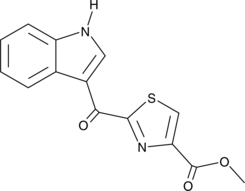
ITE is an endogenous aryl hydrocarbon receptor (AhR) agonist.1 It binds to AhR (Kd = 65 nM) and induces AhR-dependent transcription in luciferase reporter assays when used at a concentration of 0.01 µM. ITE (1 µM) inhibits anti-CD40- and IL-4-induced differentiation of isolated mouse splenic B cells, as well as proliferation and migration of SKOV3 ovarian cancer cells.2,3 In vivo, ITE (200 µg/animal, i.p.) reduces retinal detachment and ocular inflammatory cell infiltration in a mouse model of experimental autoimmune uveitis induced by complete Freund's adjuvant (CFA) and M. tuberculosis.4 ITE (80 mg/kg, i.p.) reduces tumor growth by 39% in an OVCAR-3 mouse xenograft model.3
WARNING This product is not for human or veterinary use.
References & Product Citations
1. A potential endogenous ligand for the aryl hydrocarbon receptor has potent agonist activity in vitro and in vivo. Arch. Biochem. Biophys. 450(1), 67-77 (2006).
2. Effects of AhR ligands on the production of immunoglobulins in purified mouse B cells. Biomed. Res. 33(2), 67-74 (2012).
3. An endogenous aryl hydrocarbon receptor ligand inhibits proliferation and migration of human ovarian cancer cells. Cancer Lett. 340(1), 63-71 (2013).
4. ITE, a novel endogenous nontoxic aryl hydrocarbon receptor ligand, efficiently suppresses EAU and T-
Contact Info
Cayman Chemical1180 East Ellsworth RoadAnn Arbor, Michigan 48108 USAToll Free: (800) 364-9897(USA and Canada only)Fax: (734) 971-3640


