An internal standard for the quantification of ciprofloxacin
Related Products
Technical Support & Resources

Visit our FAQ

Contact Us

Toll Free Phone (USA and Canada Only): (888) 526-5351
Direct Phone: (734) 975-3888

Request Technical Support

Technical Support Request

To streamline the process attach the appropriate questionnaire to your inquiry.

Download IHC QuestionnaireDownload WB Questionnaire

View Our Privacy Statement for details on how we use and protect your data. In addition, this site is protected by hCaptcha and its Privacy Policy and Terms of Service apply.

Ciprofloxacin-d8 (hydrochloride)

Item No. 25466

Technical Information
Formal Name
1-cyclopropyl-6-fluoro-4-oxo-7-(piperazin-1-yl-2,2,3,3,5,5,6,6-d8)-1,4-dihydroquinoline-3-carboxylic acid, monohydrochloride
CAS Number
1216659-54-9
Molecular Formula
C17H10D8FN3O3 • HCl
Formula Weight
Purity
≥99% deuterated forms (d1-d8)
A solid
Methanol: Slightly SolubleWater: Slightly Soluble
SMILES
FC1=CC2=C(C=C1N3C([2H])([2H])C([2H])([2H])NC([2H])([2H])C3([2H])[2H])N(C4CC4)C=C(C(O)=O)C2=O.Cl
InChi Code
InChI=1S/C17H18FN3O3.ClH/c18-13-7-11-14(8-15(13)20-5-3-19-4-6-20)21(10-1-2-10)9-12(16(11)22)17(23)24;/h7-10,19H,1-6H2,(H,23,24);1H/i3D2,4D2,5D2,6D2;
InChi Key
DIOIOSKKIYDRIQ-JCYLEXHWSA-N
Shipping & Storage Information
Storage
-20°C
Shipping
Room temperature in continental US; may vary elsewhere
Recommended Products

Certificates of Analysis & Batch Specific Data

Provide batch numbers separated by commas to download or request available product inserts, QC sheets, certificates of analysis, data packs, and GC-MS data.
    Add

    Add

    Add

    Cayman Chemical
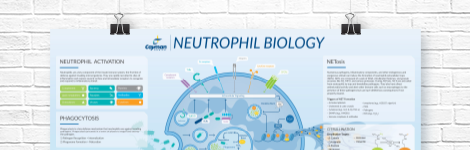
    Neutrophil Biology Wall Poster

    Explore how neutrophils shape the immune response in health and disease. This poster highlights neutrophil pathogen defense mechanisms, including phagocytosis, degranulation, and NETosis, as well as neutrophil roles in inflammation and NET-associated pathologies.

    DOWNLOAD NOW
    Product Description

    Ciprofloxacin-d8 is intended for use as an internal standard for the quantification of ciprofloxacin (Item No. 14286) by GC- or LC-MS. Ciprofloxacin is a fluoroquinolone antibiotic.1 It is active against a variety of Gram-positive and Gram-negative bacteria in vitro, including S. aureus, L. monocytogenes, P. aeruginosa, Legionella, N. gonorrhoeae, and H. pylori (MIC50s = 0.004-1 µg/ml).2 It is also active against clinical isolates of Bacteroides, Fusobacterium, Eubacterium, Actinomyces, Peptococcus, Peptostreptococcus, and Streptococcus in vitro (MIC50s = 0.5-2 µg/ml).3 Ciprofloxacin inhibits S. aureus DNA gyrase and topoisomerase IV (IC50s = 13.5 and 5.76 µg/ml, respectively).4 It reduces mortality in mouse models of intraperitoneal E. coli, P. vulgaris, K. pneumoniae, P. aeruginosa, and S. aureus infection (ED90-100s = 1-5, 2.5-5, 5-10, 20-40, and 80 mg/kg, respectively) and prevents mortality in a mouse model of subcutaneous S. typhimurium infection at 10 mg/kg.5,6 Formulations containing ciprofloxacin have been used in the treatment of bacterial infections.

    WARNING This product is not for human or veterinary use.

    References & Product Citations
    Product Description References

    1. Drlica, K., and Zhao, X. DNA gyrase, topoisomerase IV, and the 4-quinolones. Microbiol. Mol. Biol. Rev. 61(3), 377-392 (1997).

    2. Nilius, A.M., Shen, L.L., Hensey-Rudloff, D., et alIn vitro antibacterial potency and spectrum of ABT-492, a new fluoroquinolone. Antimicrob. Agents Chemother. 47(10), 3260-3269 (2003).

    3. Bansal, M.B., and Thadepalli, H. Activity of difloxacin (A-56619) and A-56620 against clinical anaerobic bacteria in vitro. Antimicrob. Agents Chemother. 31(4), 619-621 (1987).

    4. Takei, M., Fukuda, H., Kishii, R., et alTarget preference of 15 quinolones against Staphylococcus aureus, based on antibacterial activities and target inhibition. Antimicrob. Agents Chemother. 45(12), 3544-3547 (2001).

    5. Zeiler, H.J., and Grohe, K. The in vitro and in vivo activity of ciprofloxacin. Eur. J. Clin. Microbiol. 3(4), 339-343 (1984).

    6. Easmon, C.S.F., Crane, J.P., and Blowers, A. Effect of ciprofloxacin on intracellular organisms: In-vitro and in-vivo studies. J. Antimicrob. Chemother. 18 (Suppl D), 43-48 (1986).