
Features
- Nonradioactive, colorimetric assay
- Easy to use; less than 1 hour bench time
- Run 37 samples in duplicate
Technical Support & Resources
Visit our FAQ
Contact Us
Toll Free Phone (USA and Canada Only): (888) 526-5351
Direct Phone: (734) 975-3888
Product Categories
Technical Information
Shipping & Storage Information
Recommended Products
Certificates of Analysis & Batch Specific Data
Provide batch numbers separated by commas to download or request available product inserts, QC sheets, certificates of analysis, data packs, and GC-MS data.

Bioanalysis & Assay Development Services
Your Vision. Our Expertise.
- Bioanalysis and compound screening using Cayman or qualified commercial assay kits
- Development and qualification of fit-for-purpose assays in a variety of formats and platforms
- Experienced scientists dedicated to developing the best strategy for your project
Product Description
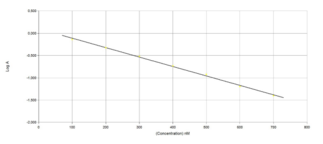
Present in nature in the form of iodide and iodate, iodine is a solid halogen at normal temperature. It is used in medicine, in the pharmaceutical and food industry. Food is the principal daily supply of iodide in human body.1 Iodide is important in basal metabolism and permits temperature regulation, intellectual development for children, muscular development, normal heart function and growth of skeleton. Iodide transport is the basis for an emerging approach of selective cancer cell destruction.2,3 Iodide uptake from blood into thyroid follicular cells is the first step in the biosynthesis of thyroid hormones T4 and T3, known to regulate many essential biological processes.4,5Thyroid hormones are indispensable for body development. This transport is mediated by NIS (sodium iodide symporter), an intrinsic membrane glycoprotein located in the basolateral membrane of thyrocytes. Since the discovery of NIS, thorough biochemical analysis has elucidated the mechanism of basolateral iodide transport and revealed the key role of NIS in thyroid diseases such as thyroid cancer, autoimmune disease, and congenital hypothyroidism.6 If rate is not in the normal proportion, some diseases can be developed as underactive thyroid if the rate is too down or overactive thyroid if the rate is too up. Other diseases exist as chronic thyroiditis of Hashimoto or cancer of the thyroid gland.7 Iodide deficiency is at origins of many thyroid metabolism disorders, this is why it is important to control rate of iodide to prevent all of these diseases. This Iodide Assay is based on the oxido-reduction reaction: cerium(IV) is reduced by arsenic(III). The reduction of yellow (420 nm) cerium(IV) to colorless cerium(III) by arsenic(III) proceeds very slowly but traces of iodide strongly accelerate this reaction with the rate being directly proportional to iodide concentration. For a given time, decay is inversely proportional to iodide concentration in well. This method is simple and nonradioactive, and as such it can be used widely.[Bertin Catalog No. D05076.96]
WARNING This product is not for human or veterinary use.
References & Product Citations
1. Iode. Techniques de l’Ingénieur J6380 Vi, (2009).
2. Role of iodine in metabolism. Recent Pat. Anticancer Drug Discov. 10(2), 123-126 (2017).
3. The sodium iodide symporter: Its pathophysiological and therapeutic implications. Clin. Endocrinol. (Oxf.) 57(5), 559-574 (2002).
4. The role of thyroid hormones in prenatal and neonatal neurological development--
5. Iodine and thyroid hormone synthesis, metabolism, and action. Molecular, Genetic, and Nutritional Aspects of Major and Trace Minerals 143-150 (2017).
6. A nonradioactive iodide uptake assay for sodium iodide symporter function. Anal. Biochem. 396(1), 91-95 (2010).
7. Thyroid hormone transport and transporters. Vitam. Horm. 106, 19-44 (2018).
Contact Info
Cayman Chemical1180 East Ellsworth RoadAnn Arbor, Michigan 48108 USAToll Free: (800) 364-9897(USA and Canada only)Fax: (734) 971-3640


