
Technical Support & Resources
Information provided in the product description is from published literature. Due to the nature of scientific experimentation, your results (e.g., selectivity and effective concentrations) or specific application for this product may differ. If you have questions about how this product fits your application, please contact our technical support staff.
Visit our FAQ
Contact Us
Toll Free Phone (USA and Canada Only): (888) 526-5351
Direct Phone: (734) 975-3888
Product Categories

Technical Information
- Eriodictioside
- Eriodictyol 7-O-rutinoside
Shipping & Storage Information



Certificates of Analysis & Batch Specific Data
Provide batch numbers separated by commas to download or request available product inserts, QC sheets, certificates of analysis, data packs, and GC-MS data.
Product Description
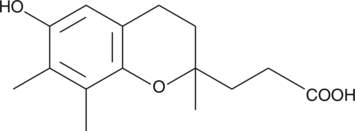
Eriocitrin is a flavonoid originally isolated from lemon peel that has antioxidant and enzyme inhibitory activity.1,2,3,4,5 Eriocitrin inhibits lipid peroxidation in a cell-free assay when used at a concentration of 10 µM and enhances the effect of α-tocopherol (Item No. 25985) on lipid peroxidation.2 It also decreases thiobarbituric acid reactive substances (TBARS) in rat plasma when administered at a dose of 75 µmol/kg, indicating a reduction in lipid peroxidation.3 Eriocitrin prevents acute exercise-induced increases in TBARS, Nε-(hexanoyl)lysine (HEL), o,o-dityrosine (DT), and nitrotyrosine (NT; Item No. 89540) in rat liver when administered at a dose of 600 mg/kg prior to exercise.4 It is also an inhibitor of monoamine oxidase A (MAO-A) and MAO-B (IC50s = 86.5 and 164 µM, respectively, for human recombinant receptors).5
WARNING This product is not for human or veterinary use.
References & Product Citations
1. Flavonoid compounds of citrus. III. Isolation and structure of eriodictyol glycoside. J. Am. Chem. Soc. 82(11), 2803-2806 (1960).
2. Isolation of eriocitrin (eriodictyol 7-
3. Identification and antioxidant activity of flavonoid metabolites in plasma and urine of eriocitrin-
4. Lemon flavonoid, eriocitrin, suppresses exercise-
5. Inhibition of human monoamine oxidase: Biological and molecular modeling studies on selected natural flavonoids. J. Agric. Food Chem. 64(47), 9004-9011 (2016).
Contact Info
Cayman Chemical1180 East Ellsworth RoadAnn Arbor, Michigan 48108 USAToll Free: (800) 364-9897(USA and Canada only)Fax: (734) 971-3640


