
Technical Support & Resources
Information provided in the product description is from published literature. Due to the nature of scientific experimentation, your results (e.g., selectivity and effective concentrations) or specific application for this product may differ. If you have questions about how this product fits your application, please contact our technical support staff.
Visit our FAQ
Contact Us
Toll Free Phone (USA and Canada Only): (888) 526-5351
Direct Phone: (734) 975-3888
Technical Information
Shipping & Storage Information
Recommended Products
Certificates of Analysis & Batch Specific Data
Provide batch numbers separated by commas to download or request available product inserts, QC sheets, certificates of analysis, data packs, and GC-MS data.

Visit Our Cancer Resource Center
Find Tools & Resources to Study the Hallmarks of Cancer
- Cancer cell signaling & regulation
- Cancer metabolism
- Tumor microenvironment
Product Description
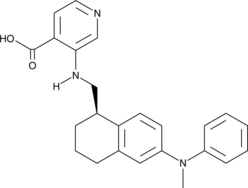
QC6352 is a dual inhibitor of dihydroorotate dehydrogenase (DHODH; IC50 = 0.3 nM) and lysine demethylase 4 (KDM4; IC50s = 35-104 nM for KDM4 isoforms).1,2 It reduces the growth rate of patient-derived glioblastoma stem cells in vitro (GR50s = 3-133 nM).1 QC6352 also reduces the growth rate of FPW1 patient-derived glioblastoma cells overexpressing a proliferation-restoring DHODH variant (DHODHA58T), an effect that can be reversed by uridine, suggesting dependence on DHODH inhibition. It increases trimethylation of lysine 36 on histone H3 (H3K36Me3) in KYSE-150 esophageal carcinoma cells overexpressing KDM4C (EC50 = 1.3 nM) and reduces the proliferation of KYSE-150 cells (EC50 = 3.5 nM).2 However, it inhibits growth to a similar extent in KDM4A, -4B, or -4C knockout RKI1 glioblastoma cells and RKI1 cells expressing a nontargeting sgRNA.1 QC6352 (10, 25, and 50 mg/kg) reduces tumor volume in a BR0869f patient-derived xenograft (PDX) mouse model of HER2-positive breast cancer and, at 100 mg/kg, reduces tumor growth and increases survival in a GBM6 orthotopic mouse model of glioblastoma.2,1
WARNING This product is not for human or veterinary use.
References & Product Citations
1. DHODH is the key target of the KDM4 inhibitor QC6352 in glioblastoma stem cells. Nat. Chem. Biol. Online ahead of print, (2026).
2. Design of KDM4 inhibitors with antiproliferative effects in cancer models. ACS Med. Chem. Lett. 8(8), 869-874 (2017).
Contact Info
Cayman Chemical1180 East Ellsworth RoadAnn Arbor, Michigan 48108 USAToll Free: (800) 364-9897(USA and Canada only)Fax: (734) 971-3640


