
Technical Support & Resources
Visit our FAQ
Contact Us
Toll Free Phone (USA and Canada Only): (888) 526-5351
Direct Phone: (734) 975-3888
Product Categories
Technical Information
- N-Arachidonyl Glycine Receptor
- GPCRW
- G Protein-Coupled Receptor 18
- NAGly Receptor
Shipping & Storage Information
Certificates of Analysis & Batch Specific Data
Provide batch numbers separated by commas to download or request available product inserts, QC sheets, certificates of analysis, data packs, and GC-MS data.
Lipid Resource Center
Discover Products & Resources for Lipid Research
- High-purity lipid standards
- Lipid roles in biology
- Lipids in health & disease
- Lipids for pharmaceutical development
- Protocols, advice, & resources
Product Description
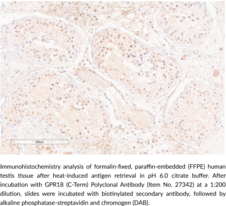
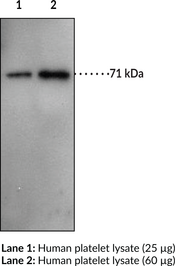
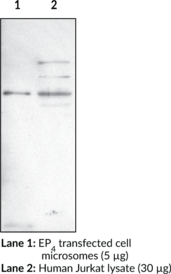
GPR18 is a G protein-coupled receptor (GPCR) that is expressed in lymphoid tissues, lung, brain, testis, and ovaries.1 It is coupled to the Gai/o and Gaq/11 transduction pathways and is activated by the polyunsaturated fatty acid metabolite resolvin D2 (Item No. 10007279) and the endocannabinoid arachidonoyl glycine (NAGly; Item No. 90051) in a context-dependent manner.1,2 Resolvin D2-induced activation of GPR18 reduces inflammatory pain induced by formalin, carrageenan, and complete Freund's adjuvant (CFA) in rats and reduces production of pro-inflammatory cytokines in mouse models of cecal ligation and puncture-induced sepsis, ocular infections, and ischemic injury.3,4 NAGly-induced activation of GPR18 lowers intraocular pressure (IOP) in mice in a fatty acid amide hydrolase-dependent manner.5 GPR18 is also overexpressed and constitutively active in patient-derived metastatic melanoma tumor samples.6 Cayman's GPR18 (C-Term) Polyclonal Antibody can be used for ELISA and immunohistochemistry (IHC) applications. The antibody recognizes the C-terminal region of GPR18 from human samples.
WARNING This product is not for human or veterinary use.
References & Product Citations
1. An update on non-
2. Potent, selective agonists for the cannabinoid-
3. Resolvin D2 relieving radicular pain is associated with regulation of inflammatory mediators, Akt/GSK-
4. Resolvin D2 enhances post-
5. Evidence for a GPR18 role in diurnal regulation of intraocular pressure. Invest. Ophthalmol. Vis. Sci. 57(14), 6419-6426 (2016).
6. Quantitative expression profiling of G-
Contact Info
Cayman Chemical1180 East Ellsworth RoadAnn Arbor, Michigan 48108 USAToll Free: (800) 364-9897(USA and Canada only)Fax: (734) 971-3640


