
Technical Support & Resources
Visit our FAQ
Contact Us
Toll Free Phone (USA and Canada Only): (888) 526-5351
Direct Phone: (734) 975-3888
Technical Information
- α-Ketoglutarate Receptor 1
- GPR80
- G Protein-Coupled Receptor 80
- G Protein-Coupled Receptor 99
- OXGR1
- 2-Oxoglutarate Receptor 1
- P2Y15
- P2Y-like GPCR
- P2Y-like Nucleotide Receptor
- P2Y Purinoceptor 15
Shipping & Storage Information
Recommended Products
Certificates of Analysis & Batch Specific Data
Provide batch numbers separated by commas to download or request available product inserts, QC sheets, certificates of analysis, data packs, and GC-MS data.
Lipid Resource Center
Discover Products & Resources for Lipid Research
- High-purity lipid standards
- Lipid roles in biology
- Lipids in health & disease
- Lipids for pharmaceutical development
- Protocols, advice, & resources
Product Description
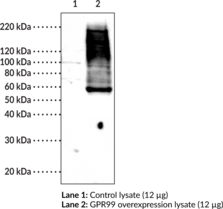
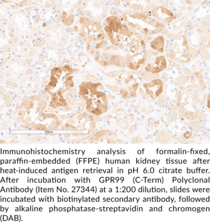
GPR99 is a G protein-coupled receptor (GPCR) that was originally identified as a purinergic receptor, P2Y15.1,2 However, it is activated by leukotriene E4 (LTE4; Item No. 20410) in the low nanomolar range and by α-ketoglutarate in the high micromolar range.3,4 It is found in the CNS, kidney, epididymis, and other tissues in the mouse, as well as in human kidney, nasal turbinates, and lung, among other tissues.5,6 GPR99 knockout in mice prevents vascular leakage induced by LTE4 and epithelial cell mucin release in mouse nasal mucosa induced by LTE4 or A. alternata.3 In the kidney, under acid-base stress, it is involved with the regulation of carbonic acid and sodium chloride resorption through activation by α-ketoglutarate.5 GPR99 is also expressed in mouse retina, and axon growth is increased when it is activated by α-ketoglutarate in isolated mouse embryo retinal explants.7 Cayman’s GPR99 (C-Term) Polyclonal Antibody can be used for Western blot and immunohistochemistry (IHC) applications. The antibody recognizes the C-terminus of GPR99 from human samples.
WARNING This product is not for human or veterinary use.
References & Product Citations
1. .
2. .
3. .
4. .
5. .
6. .
7. .
Contact Info
Cayman Chemical1180 East Ellsworth RoadAnn Arbor, Michigan 48108 USAToll Free: (800) 364-9897(USA and Canada only)Fax: (734) 971-3640


