
Technical Support & Resources
Information provided in the product description is from published literature. Due to the nature of scientific experimentation, your results (e.g., selectivity and effective concentrations) or specific application for this product may differ. If you have questions about how this product fits your application, please contact our technical support staff.
Visit our FAQ
Contact Us
Toll Free Phone (USA and Canada Only): (888) 526-5351
Direct Phone: (734) 975-3888

Technical Information
- NSC 291303
- NSC 88926
Shipping & Storage Information
Recommended Products
Certificates of Analysis & Batch Specific Data
Provide batch numbers separated by commas to download or request available product inserts, QC sheets, certificates of analysis, data packs, and GC-MS data.
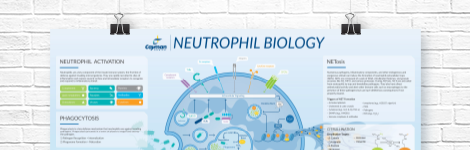
Neutrophil Biology Wall Poster
Explore how neutrophils shape the immune response in health and disease. This poster highlights neutrophil pathogen defense mechanisms, including phagocytosis, degranulation, and NETosis, as well as neutrophil roles in inflammation and NET-associated pathologies.
DOWNLOAD NOWProduct Description
Monotropein is an iridoid glycoside originally isolated from M. officinalis roots and has diverse biological activities.1,2,3,4,5 It increases cell viability and migration of bone marrow-derived endothelial progenitor cells (BM-EPCs) when used at concentrations ranging from 0.1 to 1,000 μM.1 Monotropein inhibits apoptosis and reduces levels of matrix metalloproteinase-3 (MMP-3) and MMP-13 in chondrocytes.2 It inhibits LPS-induced nuclear translocation of NF-κB and reduces COX-2, inducible nitric oxide synthase (iNOS), TNF-α, and IL-1β mRNA expression in RAW 264.7 cells.3 Monotropein (100 and 200 mg/kg) reduces colonic myeloperoxidase (MPO) activity, COX-2 and iNOS mRNA expression, and disease severity in a mouse model of ulcerative colitis induced by dextran sulfate sodium (DSS; Item No. 23250). It increases bone mineral content, bone mineral density, and improves bone microstructure in ovariectomized mice when administered at doses of 40 or 80 mg/kg.4 Monotropein (20 and 30 mg/kg) reduces acetic acid-induced writhing in mice and carrageenan-induced paw edema in rats.5 It also decreases macrophage infiltration and wound healing time and increases blood vessel formation in a rat model of wound healing.1
WARNING This product is not for human or veterinary use.
References & Product Citations
1. Monotropein promotes angiogenesis and inhibits oxidative stress-
2. Monotropein exerts protective effects against IL-
3. Monotropein isolated from the roots of Morinda officinalis ameliorates proinflammatory mediators in RAW 264.7 macrophages and dextran sulfate sodium (DSS)-
4. Monotropein isolated from the roots of Morinda officinalis increases osteoblastic bone formation and prevents bone loss in ovariectomized mice. Fitoterapia 110, 166-172 (2016).
5. Antinociceptive anti-
Contact Info
Cayman Chemical1180 East Ellsworth RoadAnn Arbor, Michigan 48108 USAToll Free: (800) 364-9897(USA and Canada only)Fax: (734) 971-3640


