
Technical Support & Resources
Information provided in the product description is from published literature. Due to the nature of scientific experimentation, your results (e.g., selectivity and effective concentrations) or specific application for this product may differ. If you have questions about how this product fits your application, please contact our technical support staff.
Visit our FAQ
Contact Us
Toll Free Phone (USA and Canada Only): (888) 526-5351
Direct Phone: (734) 975-3888
Product Categories

Technical Information
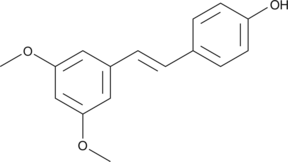
- trans-3,5-Dihydroxystilbene
Shipping & Storage Information
Recommended Products



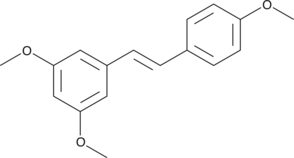
Certificates of Analysis & Batch Specific Data
Provide batch numbers separated by commas to download or request available product inserts, QC sheets, certificates of analysis, data packs, and GC-MS data.

Visit Our Cancer Resource Center
Find Tools & Resources to Study the Hallmarks of Cancer
- Cancer cell signaling & regulation
- Cancer metabolism
- Tumor microenvironment
Product Description
Pinosylvin is a stilbene originally isolated from pine heartwood that has diverse biological activities.1,2,3,4,5,6 It activates sirtuin 1 (SIRT1) and induces glucose uptake in isolated rat L6 skeletal muscle myotubes.2 Pinosylvin reduces radial growth in a panel of 28 plant pathogenic fungi when used at a concentration of 100 μg/ml.3 It reduces expression of matrix metalloproteinase-2 (MMP-2), MMP-9, and membrane type 1-MMP in and inhibits migration of HT-1080 cells.4 Pinosylvin (10 mg/kg, i.p.) reduces the number of tumor nodules and lung tumor weight in a CT26 mouse xenograft model of metastatic colon cancer. It decreases hind paw volume and myeloperoxidase (MPO) activity in a rat model of adjuvant-induced arthritis.5 Pinosylvin also exhibits plant antifeedant activity against L. americanus (snowshoe hares).6
WARNING This product is not for human or veterinary use.
References & Product Citations
1. Constituents of pine heartwood. XIX. The heartwood of Pinus pinea, Pinus pinaster, Pinus halepensis, and Pinus nigra. Acta Chem. Scand. 4(3), 444-447 (1950).
2. Plant-
3. Antifungal activity of stilbenes in in vitro bioassays and in transgenic Populus expressing a gene encoding pinosylvin synthase. Plant Cell. Rep. 22(8), 584-593 (2004).
4. Antimetastatic activity of pinosylvin, a natural stilbenoid, is associated with the suppression of matrix metalloproteinases. J. Nutr. Biochem. 23(8), 946-952 (2012).
5. In vivo effect of pinosylvin and pterostilbene in the animal model of adjuvant arthritis. Neuro. Endocrinol. Lett. 31(Suppl 2), 91-95 (2013).
6. Influence of the plant antifeedant, pinosylvin, on suppression of feeding by snowshoe hares. J. Chem. Ecol. 18(7), 1151-1164 (1992).
Contact Info
Cayman Chemical1180 East Ellsworth RoadAnn Arbor, Michigan 48108 USAToll Free: (800) 364-9897(USA and Canada only)Fax: (734) 971-3640


