
Technical Support & Resources
Visit our FAQ
Contact Us
Toll Free Phone (USA and Canada Only): (888) 526-5351
Direct Phone: (734) 975-3888
Product Categories
Technical Information
- hYTHDC2
- 3'-5' RNA Helicase YTHDC2
- YTH Domain-containing Protein 2
Shipping & Storage Information
Recommended Products
Certificates of Analysis & Batch Specific Data
Provide batch numbers separated by commas to download or request available product inserts, QC sheets, certificates of analysis, data packs, and GC-MS data.

Visit Our Cancer Resource Center
Find Tools & Resources to Study the Hallmarks of Cancer
- Cancer cell signaling & regulation
- Cancer metabolism
- Tumor microenvironment
Product Description
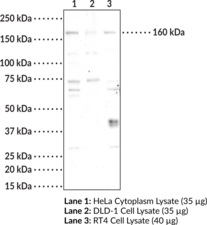
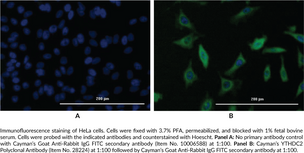
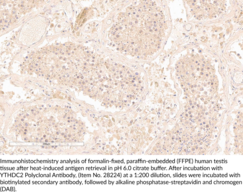
YTH domain containing 2 (YTHDC2) is an ATP-dependent 3’-5’ RNA helicase and a member of the DExD/H-box family of helicases.1 YTHDC2 contains ATP binding, ATP hydrolysis, and RNA binding motifs.1 The aYTH domain binds to N6-methyladenosine-modified germline messenger RNA to regulate meiotic gene expression in mammalian germ cells, mediating the mitotic-to-meiotic transition in mouse germ cells.2,3 Ythdc2-/- male and female mice show disrupted meiotic prophase progression.3 Male Ythdc2-/- mice have degraded germ cells and lack mature spermatozoa, while female Ythdc2-/- mice lack developing ovarian follicles and have few germ cells. YTHDC2 also facilitates hepatitis C virus (HCV) genome replication by binding to the HCV replication cofactor cyclophilin B and the HCV RNA polymerase non-structural protein 5B (NS5B).4 YTHDC2 downregulation inhibits proliferation in Huh7 hepatocellular carcinoma cells and reduces metastasis a Y2KD-116 mouse xenograft model using HCT116 cells in which YTHDC2 is downregulated.4,5 The expression of YTHDC2 in isolated human tumor tissue is positively correlated with tumor stage and lymph node metastasis.5 Cayman’s YTHDC2 Polyclonal Antibody can be used for immunofluorescence, immunohistochemistry, and Western blot applications. The antibody recognizes YTHDC2 at 160 kDa from human samples.
WARNING This product is not for human or veterinary use.
References & Product Citations
1. Transcriptional machinery of TNF-
2. Regulation of m6A transcripts by the 3'→5' RNA helicase YTHDC2 is essential for a successful meiotic program in the mammalian germline. Mol. Cell 68(2), 374-387 (2017).
3. The conserved RNA helicase YTHDC2 regulates the transition from proliferation to differentiation in the germline. Elife pii:e26116, (2017).
4. Cyclosporin A associated helicase-
5. RNA helicase YTHDC2 promotes cancer metastasis via the enhancement of the efficiency by which HIF-
Contact Info
Cayman Chemical1180 East Ellsworth RoadAnn Arbor, Michigan 48108 USAToll Free: (800) 364-9897(USA and Canada only)Fax: (734) 971-3640


