
Features
- Assay 48 samples in duplicate
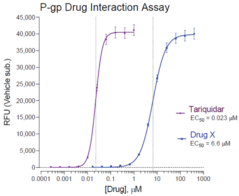
- Provide low-nanomolar sensitivities for inhibitors of P-gp
- Included in kit: Ready-to-use, pre-transfected reporter cells | Optimized media | Reference agonist | Luciferase detection reagent | Cell culture ready assay plate
Technical Support & Resources
Visit our FAQ
Contact Us
Toll Free Phone (USA and Canada Only): (888) 526-5351
Direct Phone: (734) 975-3888
Technical Information
- ATP Binding Cassette Protein B1
- ABCB1
- MDR-1
- Multi-Drug Resistance 1 Transporter
- P-gp
Shipping & Storage Information
Recommended Products
Certificates of Analysis & Batch Specific Data
Provide batch numbers separated by commas to download or request available product inserts, QC sheets, certificates of analysis, data packs, and GC-MS data.

Bioanalysis & Assay Development Services
Your Vision. Our Expertise.
- Bioanalysis and compound screening using Cayman or qualified commercial assay kits
- Development and qualification of fit-for-purpose assays in a variety of formats and platforms
- Experienced scientists dedicated to developing the best strategy for your project
Product Description
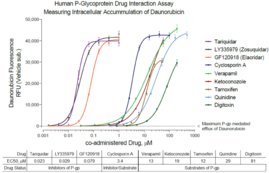
Human P-glycoprotein (P-gp) is also known as MDR1 or ABCB1, the human multidrug resistance protein 1. It is a 170kDa transmembrane glycoprotein that functions as an ATP-dependent efflux transporter present in the human body’s epithelial tissues.
P-gp is comprised of twelve membrane-spanning domains and two cytosolic nucleotide-binding domains. The trans-membrane domains comprise several substrate binding pockets capable of interacting with a broad range of both endogenous and foreign small molecule chemotypes. Xenobiotic substrates of P-gp range from pollutants, such as those encountered through unintended exposure to industrial and agricultural chemicals, to small molecule drugs that are intentionally administered for therapeutic benefit.
P-gp is highly expressed in gastrointestinal epithelium, liver, pancreatic and kidney cells, and capillary endothelial cells that establish the blood-brain barrier. Multidrug resistance research has found MDR1 expressed at high levels on the lines of transformed and tumor cells. In combination with the activities of Cytochrome P450 oxidases, the robust efflux activity of P-gp plays a critical role in limiting the absorption and systemic physiological distribution of xenobiotics and facilitating their ultimate elimination from the body. The MDR1 transporter role is important for drug-drug interaction (DDI) and drug safety assessments.[INDIGO Catalog No. HPGP-48]
Drug Safety Assessment
Determining if a drug candidate has incidental activity as either a substrate or an inhibitor of the P-gp transporter is a vital component of the drug safety assessment process. A drug that is a P-gp substrate or an inhibitor can profoundly alter the rate of absorption, distribution, metabolic conversion, and eventual excretion (ADME) of co-administered drugs, thereby significantly shifting their respective therapeutic efficacies and toxicologic profiles. Assessing a drug’s potency as an interactor with P-gp, and thus its potential liability for inducing downstream drug-drug interactions, is mandated by the FDA.
The MDR1 multidrug resistance transporter impacts public health and is associated with nosocomial infections and developments with antibiotics and mortality. MDR1 is also often cited as a transporter for drug-drug interaction in product labels and particularly in the use of digoxin. The EMA and FDA recommend at minimum in vitro MDR1 tests for interaction.
WARNING This product is not for human or veterinary use.
Contact Info
Cayman Chemical1180 East Ellsworth RoadAnn Arbor, Michigan 48108 USAToll Free: (800) 364-9897(USA and Canada only)Fax: (734) 971-3640


