
Technical Support & Resources
Information provided in the product description is from published literature. Due to the nature of scientific experimentation, your results (e.g., selectivity and effective concentrations) or specific application for this product may differ. If you have questions about how this product fits your application, please contact our technical support staff.
Visit our FAQ
Contact Us
Toll Free Phone (USA and Canada Only): (888) 526-5351
Direct Phone: (734) 975-3888
Product Categories

Technical Information
Shipping & Storage Information
Recommended Products
Certificates of Analysis & Batch Specific Data
Provide batch numbers separated by commas to download or request available product inserts, QC sheets, certificates of analysis, data packs, and GC-MS data.
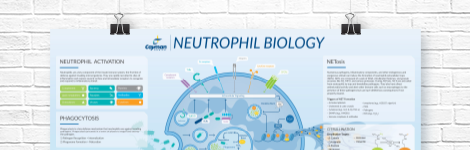
Neutrophil Biology Wall Poster
Explore how neutrophils shape the immune response in health and disease. This poster highlights neutrophil pathogen defense mechanisms, including phagocytosis, degranulation, and NETosis, as well as neutrophil roles in inflammation and NET-associated pathologies.
DOWNLOAD NOWProduct Description
ATI-2341 is a pepducin Gαi-signaling biased agonist of chemokine (C-X-C motif) receptor 4 (CXCR4).1 It induces dissociation of Gαi and Gγ2, indicating activation of Gαi-signaling, with an EC50 value of 0.21 µM in a bioluminescence resonance energy transfer (BRET) assay using HEK293T cells expressing CXCR4. ATI-2341 is selective for Gαi over Gα13 (EC50s = 0.53 and >1 µM, respectively, in BRET engagement assays) and is biased for Gαi engagement over β-arrestin-2, G protein-coupled receptor kinase 2 (GRK2), or GRK3 recruitment, exhibiting bias factor values of 24, 24.9, and 30, respectively. It induces chemotaxis of CCRF-CEM T cells, which endogenously express CXCR4, in a concentration-dependent manner. ATI-2341 (0.45 µmol/kg) increases peritoneal lavage fluid infiltration of polymorphonuclear leukocytes (PMNs) in mice.2
WARNING This product is not for human or veterinary use.
References & Product Citations
1. Pepducin targeting the C-
2. Discovery of a CXCR4 agonist pepducin that mobilizes bone marrow hematopoietic cells. Proc. Natl. Acad. Sci. USA 107(51), 22255-22259 (2010).
Contact Info
Cayman Chemical1180 East Ellsworth RoadAnn Arbor, Michigan 48108 USAToll Free: (800) 364-9897(USA and Canada only)Fax: (734) 971-3640


