
Technical Support & Resources
Visit our FAQ
Contact Us
Toll Free Phone (USA and Canada Only): (888) 526-5351
Direct Phone: (734) 975-3888
Product Categories
Technical Information
- SARS-CoV-2 Spike S1 Subunit
- SARS-CoV-2 Surface Glycoprotein S1 Subunit
- Severe Acute Respiratory Syndrome Coronavirus 2 Spike Glycoprotein S1 Subunit
- Severe Acute Respiratory Syndrome Coronavirus 2 Surface Glycoprotein S1 Subunit
Shipping & Storage Information
Recommended Products
Certificates of Analysis & Batch Specific Data
Provide batch numbers separated by commas to download or request available product inserts, QC sheets, certificates of analysis, data packs, and GC-MS data.
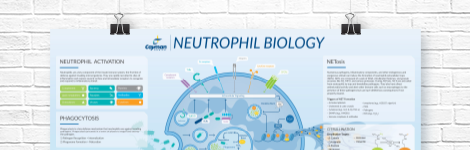
Neutrophil Biology Wall Poster
Explore how neutrophils shape the immune response in health and disease. This poster highlights neutrophil pathogen defense mechanisms, including phagocytosis, degranulation, and NETosis, as well as neutrophil roles in inflammation and NET-associated pathologies.
DOWNLOAD NOWProduct Description
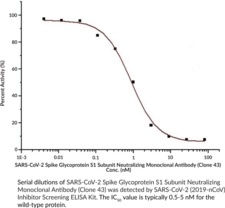
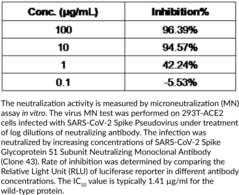
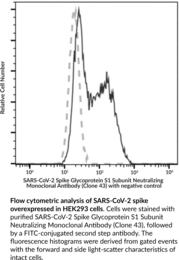
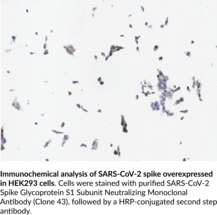
Severe acute respiratory syndrome coronavirus 2 (SARS-CoV-2) is an enveloped positive-stranded RNA virus, a member of the Betacoronavirus genus, and the causative agent of COVID-19.1,2,3,4,5 The SARS-CoV-2 spike glycoprotein, also known as the surface glycoprotein, is located on the outer envelope of the virion.1 It is composed of an S1 and S2 subunit divided by a furin S-cleavage site not found in other SARS-CoVs.6,7 The S1 subunit contains the receptor-binding domain (RBD), which binds to the carboxypeptidase angiotensin-converting enzyme 2 (ACE2), and the S1 and S2 subunits are cleaved by the protease TMPRSS2 to facilitate viral fusion with the host cell membrane.8,9,10 In this way, ACE2 acts as the functional receptor for SARS-CoV-2. The SARS-CoV-2 spike glycoprotein S1 subunit induces inflammatory gene expression in the frontal cortex, hippocampus, and hypothalamus, as well as activates toll-like receptor 2 (TLR2) and TLR4 signaling and increases social avoidance in the juvenile social exploration test in rats.11 SARS-CoV-2 infection can result in the production of neutralizing antibodies, which bind to the SARS-CoV-2 spike RBD preventing further viral entry and infection, starting approximately 4-10 days after symptom onset.12,13 Cayman’s SARS-CoV-2 Spike Glycoprotein S1 Subunit Neutralizing Monoclonal Antibody (Clone 43) disrupts the spike glycoprotein S1 subunit-ACE2 interaction and can be used for ELISA, flow cytometry (FC), and immunohistochemistry (IHC; paraffin) applications, as well as microneutralization (MN) assays.
WARNING This product is not for human or veterinary use.
References & Product Citations
1. From SARS and MERS CoVs to SARS-
2. Genomic characterisation and epidemiology of 2019 novel coronavirus: Implications for virus origins and receptor binding. Lancet 395(10224), 565-574 (2020).
3. Novel coronavirus 2019-
4. Incidence of thrombotic complications in critically ill ICU patients with COVID-
5. Analysis of 92 deceased patients with COVID-
6. Composition and divergence of coronavirus spike proteins and host ACE2 receptors predict potential intermediate hosts of SARS-
7. Structure, function, and antigenicity of the SARS-
8. SARS-
9. Structural basis for the recognition of the SARS-
10. Cryo-
11. SARS-
12. Kinetics of viral load and antibody response in relation to COVID-
13. Antibody detection and dynamic characteristics in patients with coronavirus disease 2019. Clin. Infect. Dis. 71(8), 1930-1934 (2020).
Contact Info
Cayman Chemical1180 East Ellsworth RoadAnn Arbor, Michigan 48108 USAToll Free: (800) 364-9897(USA and Canada only)Fax: (734) 971-3640


