
Technical Support & Resources
Visit our FAQ
Contact Us
Toll Free Phone (USA and Canada Only): (888) 526-5351
Direct Phone: (734) 975-3888
Product Categories
Technical Information
- Cluster of Differentiation 31
- EndoCAM
- GPIIA
- PECA1
- Platelet Endothelial Cell Adhesion Molecule (PECAM-1)
Shipping & Storage Information
Recommended Products
Certificates of Analysis & Batch Specific Data
Provide batch numbers separated by commas to download or request available product inserts, QC sheets, certificates of analysis, data packs, and GC-MS data.

Neutrophil Biology Wall Poster
Explore how neutrophils shape the immune response in health and disease. This poster highlights neutrophil pathogen defense mechanisms, including phagocytosis, degranulation, and NETosis, as well as neutrophil roles in inflammation and NET-associated pathologies.
DOWNLOAD NOWProduct Description
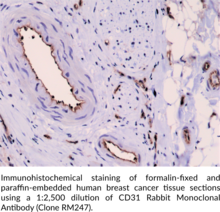
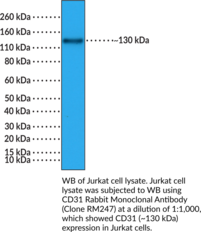
CD31, also known as platelet endothelial cell adhesion molecule (PECAM-1), is a vascular cell adhesion molecule and member of the immunoglobulin (Ig) superfamily of glycoproteins.1 It is a transmembrane glycoprotein that contains a large extracellular domain with Ig homology domains and glycosaminoglycan binding sites, a membrane-spanning region, and a cytoplasmic domain containing multiple phosphorylation sites.1,2 CD31 is expressed on a variety of cells, including endothelial cells, monocytes, neutrophils, and platelets, among others, and is a surface marker for embryonic stem cells (ESCs).1,3 It forms homophilic interactions, which allow it to aggregate at endothelial cell-cell junctions where it regulates vascular permeability.2 Tyrosine phosphorylation at sites on the CD31 cytoplasmic domain, including at immunoreceptor tyrosine-based inhibitory motifs (ITIMs), recruits cytoplasmic proteins, leading to downstream signaling with either inhibitory or activating effects.4 CD31 also has roles in integrin-mediated adhesion, leukocyte recruitment, angiogenesis, and inflammation.2,5,6 High levels of CD31+ circulating cells positively correlate with C-reactive protein (CRP) levels and the Framingham risk score for hard coronary artery disease, while low levels on circulating cells negatively correlate with the Framingham risk score.7 A mutation in PECAM1, the gene encoding CD31, is associated with atherosclerotic cerebral infarction.8 Cayman’s CD31 Rabbit Monoclonal Antibody (Clone RM247) can be used for immunohistochemistry (IHC) and Western blot (WB) applications. The antibody recognizes CD31 at approximately 130 kDa from human samples.
WARNING This product is not for human or veterinary use.
References & Product Citations
1. Molecular and functional aspects of PECAM-
2. Endothelial functions of PECAM-
3. Embryonic stem cell markers. Molecules 17(6), 6196-6236 (2012).
4. Signal transduction pathways mediated by PECAM-
5. The biology of PECAM-
6. PECAM-
7. Circulating CD31+ leukocyte frequency is associated with cardiovascular risk factors. Atherosclerosis 229(1), 228-233 (2013).
8. Asn563Ser polymorphism of CD31/PECAM-
Contact Info
Cayman Chemical1180 East Ellsworth RoadAnn Arbor, Michigan 48108 USAToll Free: (800) 364-9897(USA and Canada only)Fax: (734) 971-3640


