
Technical Support & Resources
Visit our FAQ
Contact Us
Toll Free Phone (USA and Canada Only): (888) 526-5351
Direct Phone: (734) 975-3888
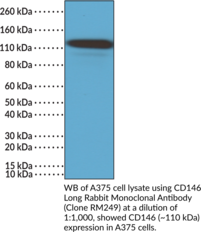
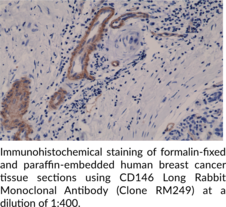
Technical Information
- LgCD146
- CD146-L
- MUC18
- MCAM-1
Shipping & Storage Information
Recommended Products
Certificates of Analysis & Batch Specific Data
Provide batch numbers separated by commas to download or request available product inserts, QC sheets, certificates of analysis, data packs, and GC-MS data.
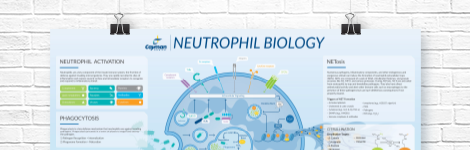
Neutrophil Biology Wall Poster
Explore how neutrophils shape the immune response in health and disease. This poster highlights neutrophil pathogen defense mechanisms, including phagocytosis, degranulation, and NETosis, as well as neutrophil roles in inflammation and NET-associated pathologies.
DOWNLOAD NOWProduct Description
CD146, also known as the melanoma cell adhesion molecule (MCAM), is an adhesion molecule and type 1 transmembrane glycoprotein with roles in vascular homeostasis, cell migration, and neuronal differentiation and is encoded by MCAM in humans.1,2 It is comprised of a signal sequence, an extracellular domain containing five immunoglobulin-like (Ig-like) domains, a hydrophobic transmembrane domain, and a cytosolic domain composed of an ezrin, radixin, moesin (ERM) protein complex binding motif and a double leucine motif for epithelial basolateral targeting. Alternative splicing of MCAM produces two isoforms that differ in length of their cytosolic domain, CD146 short (shCD146) and CD146 long (lgCD146), that contain one or two protein kinase C (PKC) phosphorylation sites, respectively.3 LgCD146 is expressed on endothelial cells, smooth muscle cells (SMCs), and pericytes where it is localized to tight junctions, as well as in mononuclear cells, mesenchymal stromal cells, and trophoblasts.1 It induces stabilization of capillary-like structures in a Matrigel™ assay. Cayman’s CD146 Long Rabbit Monoclonal Antibody (Clone RM249) can be used for immunohistochemistry (IHC) and Western blot (WB) applications.
WARNING This product is not for human or veterinary use.
References & Product Citations
1. .
2. .
3. .
Contact Info
Cayman Chemical1180 East Ellsworth RoadAnn Arbor, Michigan 48108 USAToll Free: (800) 364-9897(USA and Canada only)Fax: (734) 971-3640


