
Technical Support & Resources
Visit our FAQ
Contact Us
Toll Free Phone (USA and Canada Only): (888) 526-5351
Direct Phone: (734) 975-3888
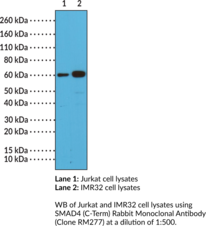
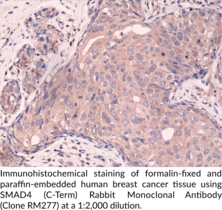
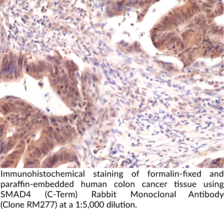
Technical Information
- Deleted in Pancreatic Carcinoma Locus 4
- DPC4
- MADH4
- Mothers Against Decapentalplegic Homolog 4
Shipping & Storage Information
Recommended Products
Certificates of Analysis & Batch Specific Data
Provide batch numbers separated by commas to download or request available product inserts, QC sheets, certificates of analysis, data packs, and GC-MS data.

Visit Our Cancer Resource Center
Find Tools & Resources to Study the Hallmarks of Cancer
- Cancer cell signaling & regulation
- Cancer metabolism
- Tumor microenvironment
Product Description
SMAD4, also known as deleted in pancreatic carcinoma locus 4 (DPC4), is a tumor suppressor and a signal transduction protein that functions as a central mediator of the TGF-β and bone morphogenic protein (BMP) signaling pathways.1,2 It is comprised of an N-terminal MH1 domain that binds DNA, a linker region containing a C-terminal SMAD activation domain essential to SMAD4 transcriptional activity, and a C-terminal MH2 domain that interacts with the MH1 domain of other SMAD proteins to facilitate homo- and heterodimerization.2 SMAD4 is ubiquitously expressed and localized to both the nucleus and cytosol.1 Upon TGF-β or BMP receptor activation, SMAD4 forms complexes with phosphorylated SMAD2 and SMAD3 or SMAD1, SMAD5, and SMAD8, respectively, which are translocated to the nucleus to induce cell cycle arrest and apoptosis.2 Homozygous deletion of, or intragenic inactivation mutations in, SMAD4 have been found in pancreatic and colorectal cancers. Heterozygous mutations in SMAD4 have been found in approximately 20% of patients with juvenile polyposis syndrome and are positively correlated with manifestation of hereditary hemorrhagic telangiectasia.3 Cayman’s SMAD4 (C-Term) Rabbit Monoclonal Antibody can be used for immunohistochemistry (IHC) and Western blot (WB) applications.
WARNING This product is not for human or veterinary use.
References & Product Citations
1. Smad4/DPC4. J. Clin. Pathol. 71(8), 661-664 (2018).
2. The role of TGF-
3. SMAD4 mutation segregating in a family with juvenile polyposis, aortopathy, and mitral valve dysfunction. Am. J. Med. Genet. A. 155A(5), 1165-1169 (2011).
Contact Info
Cayman Chemical1180 East Ellsworth RoadAnn Arbor, Michigan 48108 USAToll Free: (800) 364-9897(USA and Canada only)Fax: (734) 971-3640


