
Technical Support & Resources
Visit our FAQ
Contact Us
Toll Free Phone (USA and Canada Only): (888) 526-5351
Direct Phone: (734) 975-3888
Product Categories
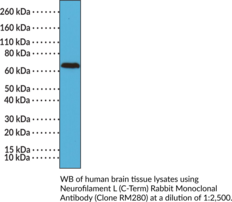
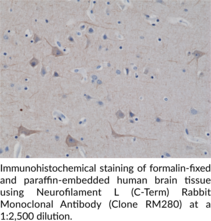
Technical Information
- Neurofilament Light Polypeptide
- NF-L
Shipping & Storage Information
Recommended Products
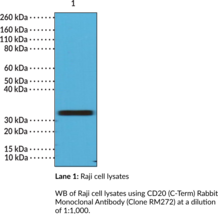
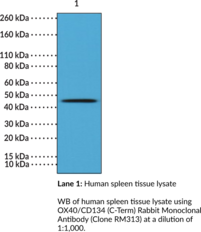
Certificates of Analysis & Batch Specific Data
Provide batch numbers separated by commas to download or request available product inserts, QC sheets, certificates of analysis, data packs, and GC-MS data.
Product Description
Neurofilament L (NF-L) is one of four subunits that form NFs, which are type III intermediate filament proteins that enable axonal growth, maintain structure, and facilitate nerve conduction.1,2 NF-L is comprised of an N-terminal domain that regulates neurofilament assembly, a central α-helical rod region that mediates dimerization, and a glutamic acid-rich C-terminal tail that is subject to phosphorylation.1,3,2 It is abundantly expressed in myelinated axons in the central and peripheral nervous systems and localizes to the cytoplasm, where it associates with an NF-middle (NF-M) or -heavy (NF-H) subunit to form parallel coiled-coil heterodimers.3 These heterodimers then associate in an anti-parallel manner to form tetramers, which assemble into NFs. Cerebrospinal fluid (CSF) NF-L levels have been used as a marker of axonal injury in a variety of neurodegenerative diseases, including amyotrophic lateral sclerosis (ALS), multiple sclerosis (MS), Parkinson’s disease, and Alzheimer’s disease.1 Mutations in NEFL, the gene encoding NF-L, have been found in patients with Charcot-Marie-Tooth disease type 2E (CMT2E), a neurological disease characterized by muscle weakness and atrophy.4 Cayman’s Neurofilament L (C-Term) Rabbit Monoclonal Antibody (Clone RM280) can be used for immunohistochemistry (IHC) and Western blot (WB) applications.
WARNING This product is not for human or veterinary use.
References & Product Citations
1. Neurofilament light chain as a biomarker in neurological disorders. J. Neurol. Neurosurg. Psychiatry 90(8), 870-881 (2019).
2. Review of the multiple aspects of neurofilament functions, and their possible contribution to neurodegeneration. Mol. Neurobiol. 38(1), 27-65 (2008).
3. Neurofilaments and neurofilament proteins in health and disease. Cold Spring Harb. Perspect. Biol. 9(4), a018309 (2017).
4. Mutations in the neurofilament light chain gene (NEFL) cause early onset severe Charcot-
Contact Info
Cayman Chemical1180 East Ellsworth RoadAnn Arbor, Michigan 48108 USAToll Free: (800) 364-9897(USA and Canada only)Fax: (734) 971-3640


