
Technical Support & Resources
Visit our FAQ
Contact Us
Toll Free Phone (USA and Canada Only): (888) 526-5351
Direct Phone: (734) 975-3888
Product Categories
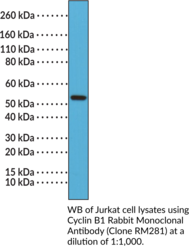
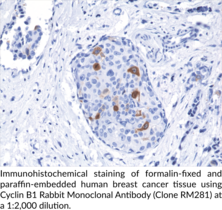
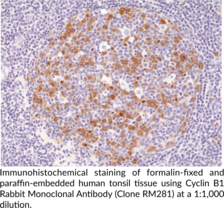
Technical Information
- G2/Mitotic-specific Cyclin B1
Shipping & Storage Information
Recommended Products
Certificates of Analysis & Batch Specific Data
Provide batch numbers separated by commas to download or request available product inserts, QC sheets, certificates of analysis, data packs, and GC-MS data.

Visit Our Cancer Resource Center
Find Tools & Resources to Study the Hallmarks of Cancer
- Cancer cell signaling & regulation
- Cancer metabolism
- Tumor microenvironment
Product Description
Cyclin B1 is a regulatory protein responsible for the initiation of mitosis.1 It contains an unstructured N-terminal domain that associates with mitotic chromosomes, a D-box sequence, which regulates the degradation of cyclin B1, a cytoplasmic retention sequence (CRS), and a cyclin box domain, which binds cyclin-dependent kinase 1 (Cdk1) and contains an MRAIL motif that associates with centrosomes.2 Cyclin B1 forms a complex with Cdk1 and is localized primarily to the cytoplasm until cyclin B1 protein levels peak at the G2/M transition.1 Cyclin B1 is then phosphorylated at the CRS by Cdk1 and polo-like kinase 1 (Plk1), which triggers the translocation of the complex to the nucleus where it phosphorylates a variety of substrates to initiate mitosis. When cyclin B1 is ubiquitinated and degraded, the cell exits anaphase. CCNB1, the gene encoding cyclin D1, is overexpressed throughout the cell cycle in cancer cells lacking the tumor suppressor p53 and acts as a tumor antigen.3,4 CCNB1 overexpression in an esophageal squamous cell carcinoma (ESCC) mouse xenograft model increases invasion and metastasis, while siRNA suppression of cyclin B1 expression inhibits metastasis to the lungs.5 In contrast, overexpression of CCNB1 in patient-derived colorectal cancer tissue negatively correlates to metastasis and low expression positively correlates to poorer overall survival.6 Cayman’s Cyclin B1 Rabbit Monoclonal Antibody (Clone RM281) can be used for immunohistochemistry (IHC) and Western blot (WB) applications.
WARNING This product is not for human or veterinary use.
References & Product Citations
1. Cyclin B1 and CDK1: Nuclear localization and upstream regulators. Prog. Cell Cycle Res. 5, 335-347 (2003).
2. Determinants of human cyclin B1 association with mitotic chromosomes. PLoS One 8(3), e59169 (2013).
3. Cyclin B1 and other cyclins as tumor antigens in immunosurveillance and immunotherapy of cancer. Cancer Res. 66(1), 6-9 (2006).
4. Immune recognition of cyclin B1 as a tumor antigen is a result of its overexpression in human tumors that is caused by non-
5. Overexpression of cyclin B1 in human esophageal squamous cell carcinoma cells induces tumor cell invasive growth and metastasis. Carcinogenesis 29(2), 307-315 (2008).
6. Cyclin B1 suppresses colorectal cancer invasion and metastasis by regulating e-
Contact Info
Cayman Chemical1180 East Ellsworth RoadAnn Arbor, Michigan 48108 USAToll Free: (800) 364-9897(USA and Canada only)Fax: (734) 971-3640


